What Is Molecular Sieve Dehydration and Why Does It Matter?
Molecular sieve dehydration removes water vapor from gas or liquid streams down to ultra-low levels — often below 0.1 parts per million by volume (ppmv). Other technologies can dry an industrial stream. But only molecular sieves reliably hit the moisture specifications that cryogenic processes demand, where even trace water causes disaster.
Consider a liquefied natural gas (LNG) plant. Before natural gas can be chilled to -162°C for liquefaction, every trace of water must be eliminated. At that temperature, a few ppm of residual moisture will freeze into solid hydrates that clog heat exchangers, block valves, and can shut down a multi-billion-dollar production train. Conventional glycol dehydration — the workhorse of pipeline gas drying — cannot get you there. It typically delivers a dew point around -10°C to -40°C at best. Molecular sieve dehydration takes that to below -100°C dew point, achieving water concentrations under 0.1 ppmv.
The same logic applies across industries: ethanol plants that need to break the ethanol-water azeotrope to produce fuel-grade bioethanol, air separation units that must remove both water and CO₂ before cryogenic distillation, and refrigerant manufacturers who cannot tolerate a single ice crystal in a closed-loop system. When the moisture specification is measured in parts per million rather than percentage points, molecular sieve dehydration stops being an option — it becomes a process requirement.
How the Molecular Sieve Dehydration Process Works
Molecular sieve dehydration runs on two interdependent principles: selective physical adsorption that traps water molecules inside precisely sized crystalline pores, and thermal swing regeneration that restores the adsorbent for repeated use. Understand either in isolation and you miss half the picture.
The Adsorption Mechanism: How Molecular Sieves Trap Water
Molecular sieves are synthetic zeolites — crystalline aluminosilicate materials with a three-dimensional pore structure of uniform, molecule-sized channels. Unlike silica gel or activated alumina, which have a broad distribution of pore sizes, a molecular sieve’s pores are identical and precisely controlled during synthesis. This uniformity is what gives the material its name: it literally sieves molecules by size.
The pores in dehydration-grade molecular sieves measure 3 to 5 angstroms (Å) in diameter. A water molecule measures approximately 2.8 Å — small enough to enter any of these pores. Most other molecules found in industrial process streams are larger: ethanol at roughly 4.3 Å, propane at about 4.9 Å, and most refrigerant molecules above 5 Å. This size differential creates the first layer of selectivity: water gets in, larger molecules are physically excluded.
The second layer is polarity. The interior of a zeolite pore is a highly polar environment because of the exchangeable cations — potassium (K⁺), sodium (Na⁺), or calcium (Ca²⁺) — that create strong local electrostatic fields. Water is one of the most polar small molecules in existence, so it binds preferentially to these sites through van der Waals forces. This is physical adsorption, not a chemical reaction — the water molecule stays intact, held to the pore wall by intermolecular forces rather than chemical bonds. But the adsorption is unusually strong: water will displace almost any other co-adsorbed molecule from the zeolite surface.
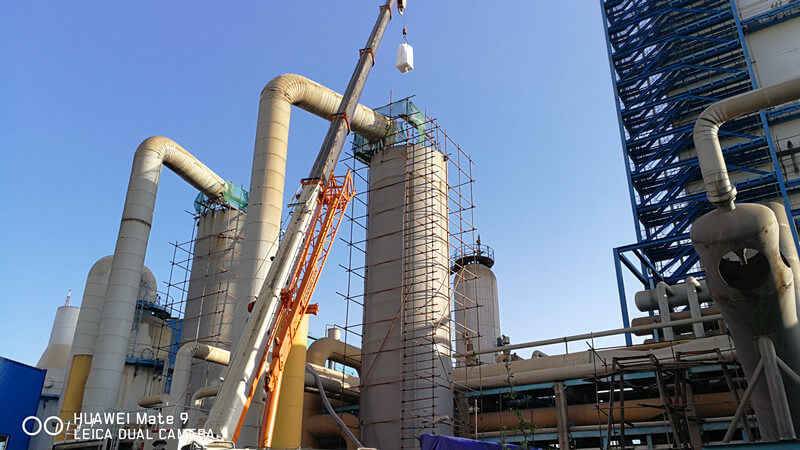
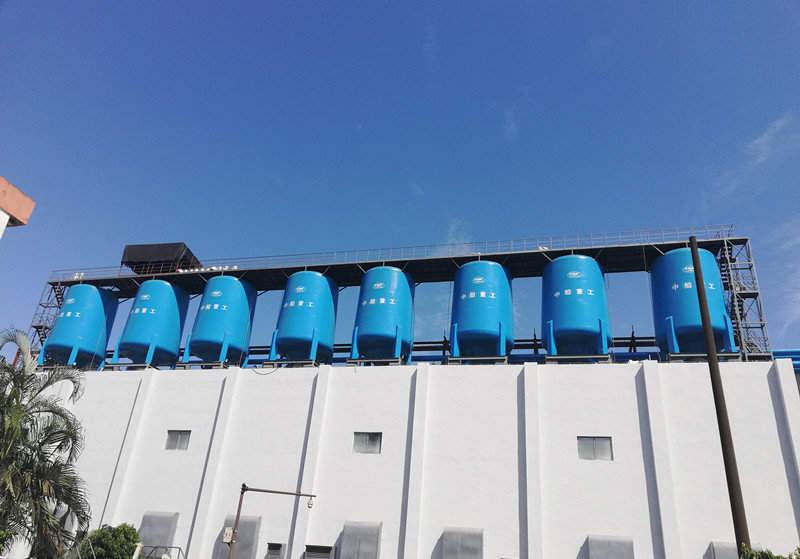
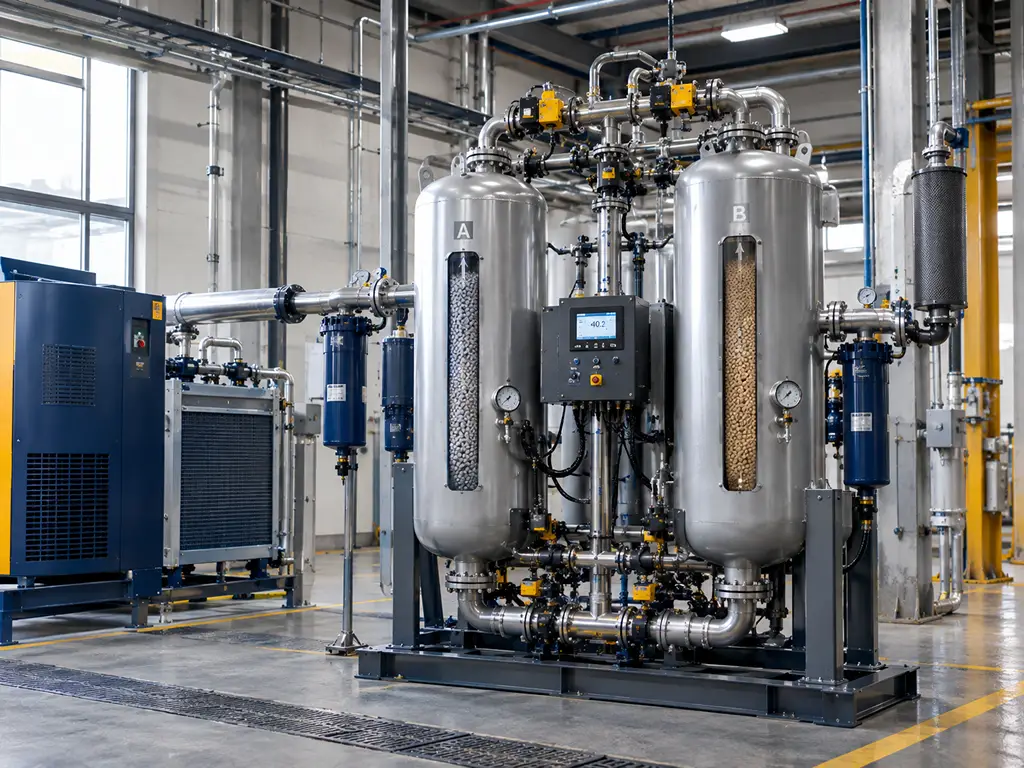
In operation, wet gas enters the top of a vertical adsorption tower and flows downward through a packed bed of molecular sieve beads or pellets. As the gas moves through the bed, a distinct pattern emerges. The uppermost portion of the bed — the saturation zone — rapidly reaches equilibrium with the incoming water concentration and can adsorb no more. Below it lies the mass-transfer zone (MTZ), a band of actively adsorbing material where the water concentration drops from the feed level to the target outlet level. Over the course of an adsorption cycle — typically 8 to 16 hours — the MTZ migrates downward through the bed. When it reaches the bottom, water breaks through into the outlet stream, and that vessel must be taken offline for regeneration (Herold & Mokhatab, Gas Processing News, 2017).
Water capacity depends on molecular sieve type and the stated test conditions. Types 3A through 5A typically adsorb about 20 to 22 percent of their own weight in water, while industrial 13X grades can reach approximately 25 to 30 percent. Actual working capacity in a dehydration bed is lower than the static laboratory value and declines gradually as the material ages.
The Regeneration Cycle: How Molecular Sieves Are Reused
If adsorption were a one-way process, molecular sieve dehydration would be prohibitively expensive — you would be replacing tons of saturated adsorbent every few hours. Regeneration makes the technology economically viable. Getting regeneration right is what separates a reliable unit from one plagued by premature bed failure.
The process is called thermal swing adsorption (TSA). Once a vessel’s MTZ reaches breakthrough, automatic switching valves redirect the wet feed gas to a fresh vessel while the saturated bed enters regeneration. The cycle has four stages:
Heating. A side stream of dry product gas — typically about 10 percent of the total throughput — is heated to between 175°C and 315°C, depending on the molecular sieve type. This hot, dry gas flows upward through the saturated bed, supplying the thermal energy needed to overcome the van der Waals forces holding water molecules to the pore walls. The water desorbs and is carried out with the regeneration gas.
A critical detail: the heating cannot be instantaneous. If regeneration gas enters at full temperature from the start, water desorbed from the hot bottom of the bed can condense when it reaches the still-cold upper section. The appropriate ramp depends on vessel size, bed geometry, gas flow, heater control, cycle time, and the allowable temperature gradient across the bed. Compact and medium systems may use ramps near 5 to 10°C per minute when their thermal profile and available regeneration window permit it (Herold & Mokhatab, Gas Processing News, 2017), while conservative large-bed guidance may limit heating to 30 to 50°C per hour (JALON regeneration guidance). The final ramp should be validated against outlet-temperature history and the equipment and adsorbent supplier’s operating procedure, especially where a 2+1 configuration leaves only about eight hours for heating, desorption, and cooling.
Cooling. After the bed reaches target temperature and water desorption is complete, cool dry gas is circulated to bring the bed back to its operating temperature — typically 20 to 50°C.
Standby. The regenerated vessel waits, pressurized and ready, for the online vessel to reach breakthrough.
Switch. Automatic valves transfer the regenerated vessel into adsorption service and move the saturated vessel into heating. The cycle repeats.
For a standard two-plus-one (2+1) vessel configuration — two vessels in adsorption at any time, one in regeneration — the total cycle time is roughly 24 hours, with only about 8 hours available for complete regeneration. This time pressure is what drives the careful engineering of heating rates and gas flows. A properly designed and operated molecular sieve bed can last 3 to 5 years before requiring changeout, though contamination by free water, compressor oil, or heavy hydrocarbons can shorten this dramatically.
Types of Molecular Sieves for Dehydration: 3A, 4A, and 5A Compared
Not all molecular sieves are interchangeable. The key differentiator is pore size, which is determined by the cation occupying exchange sites in the zeolite framework. The cation — not the silicon-to-aluminum ratio or the crystal structure alone — sets the effective channel diameter, and that diameter dictates which molecules can enter the pore alongside water.
| Type | Pore Size | Cation | What It Adsorbs | Typical Dehydration Application |
|---|---|---|---|---|
| 3A | ~3 Å | K⁺ | Water only (~2.8 Å); methanol, ethanol, and most hydrocarbons pass through | Natural gas with methanol injection, ethanol dehydration, olefin drying, refrigerants, insulated glass |
| 4A | ~4 Å | Na⁺ | Water + CO₂ + H₂S + light hydrocarbons | LNG pretreatment, natural gas without methanol, compressed air drying, general solvent drying |
| 5A | ~5 Å | Ca²⁺ | Water + CO₂ + larger hydrocarbons + N₂ | PSA gas separation, normal/isomerous paraffin separation, specialty drying applications |
The practical decision logic is simple: if your only goal is dehydration and your feed gas contains methanol — a common hydrate inhibitor injected into natural gas pipelines — use 3A. Methanol molecules are too large to enter 3A pores and pass straight through to be recovered downstream. If you use 4A instead, methanol will co-adsorb, compete with water for pore space, and reduce your effective dehydration capacity. Worse, the methanol desorbed during regeneration creates a disposal problem.
If methanol is absent from your stream, 4A offers slightly higher water adsorption capacity — typically about 21 to 22 weight percent versus 19 to 20 percent for 3A — and greater thermal stability. For LNG pretreatment, where the goal is simultaneous water and CO₂ removal ahead of cryogenic processing, 4A is the standard choice. Type 5A sees less use in pure dehydration service and more in pressure swing adsorption (PSA) gas separation, where its ability to discriminate between linear and branched hydrocarbons is the primary value.
Industrial Applications of Molecular Sieve Dehydration
The underlying physics of molecular sieve dehydration is the same across industries. But the starting water load, the target outlet specification, the co-existing contaminants, and the economic constraints differ enormously from one application to the next. Understanding your specific industry context is the prerequisite to correct type selection and process design.
Natural Gas and LNG Dehydration
Natural gas dehydration is the largest single application for molecular sieves and the context in which most of the published design knowledge was developed. The driver is cryogenic processing: before natural gas can be liquefied at -162°C or sent through a turboexpander for NGL recovery, water must be reduced to concentrations that will not form solid hydrates.
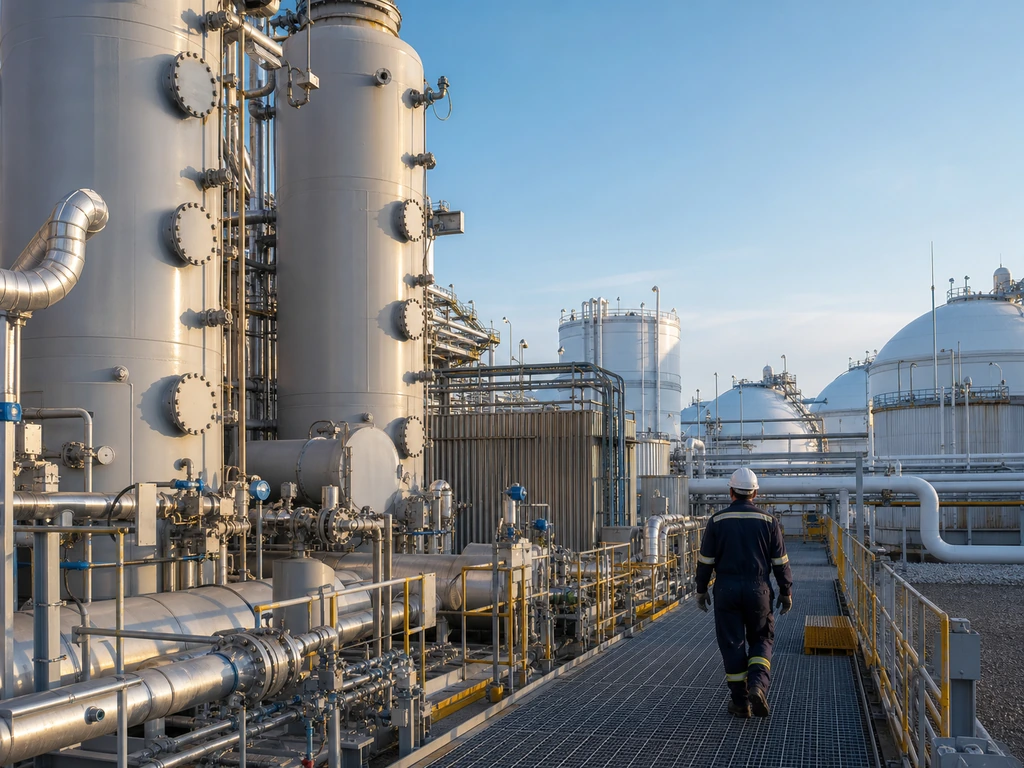
A typical molecular sieve dehydration unit in LNG service operates at 30 to 100 bar, with inlet gas temperatures between 20°C and 50°C. The inlet gas is water-saturated at these conditions, and the required outlet specification is below 0.1 ppmv — roughly a 10,000-fold reduction. Large LNG trains can process over 200 million standard cubic feet per day (MMSCFD), requiring beds that may contain 50 to 100 tons of molecular sieve each.
The dominant failure mode in natural gas service is bed contamination. Free water — carried over from an undersized inlet knockout drum — causes granular fracture and dusting. Compressor lube oil and heavy hydrocarbons deposit on the zeolite surface and coke during high-temperature regeneration, progressively blocking pore access. Both mechanisms reduce effective capacity and shorten bed life. Upstream protection — properly sized coalescing filters and knockout drums — is not optional equipment; it is the primary determinant of whether a molecular sieve bed reaches its design life of 3 to 5 years.
Ethanol Dehydration for Fuel-Grade Production
Ethanol and water form a minimum-boiling azeotrope at approximately 95.6 weight percent ethanol at atmospheric pressure. Simple distillation cannot cross this threshold because the vapor phase has the same composition as the liquid phase at the azeotropic point. To produce fuel-grade ethanol — typically 99.5 weight percent or higher — you need a technology that does not rely on boiling point differences.
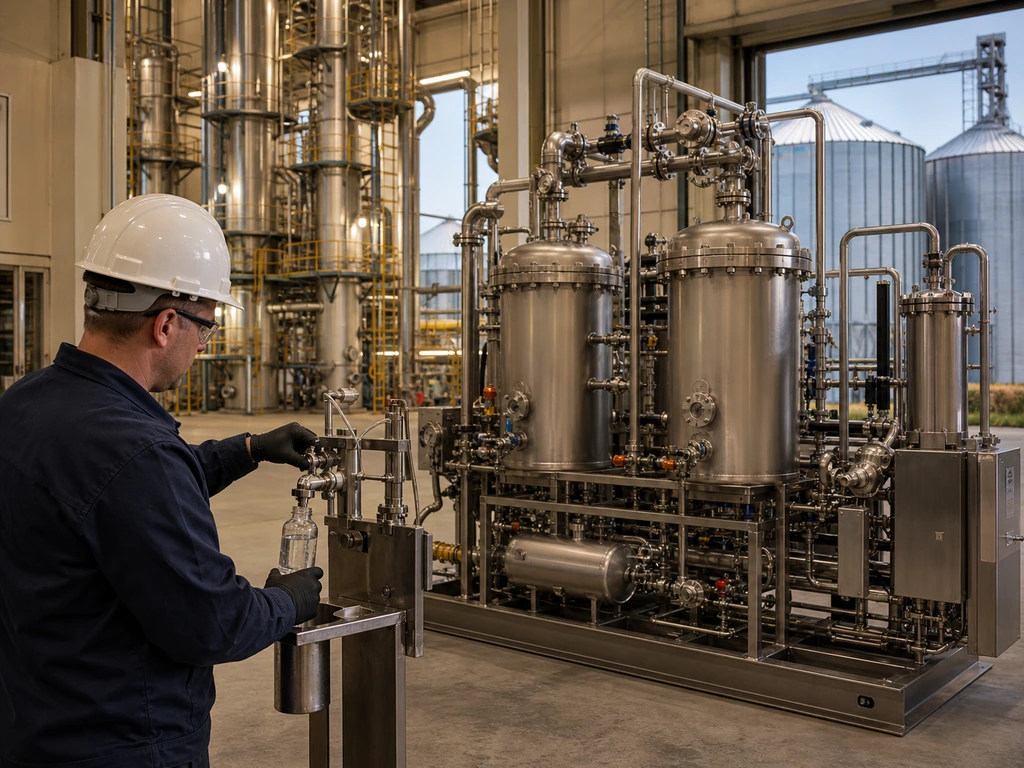
Molecular sieve ethanol dehydration exploits molecular size rather than volatility. In a typical corn or sugarcane ethanol plant, fermented and distilled ethanol at roughly 93 to 95 percent purity is vaporized and passed through a bed of 3A molecular sieve at elevated temperature and pressure. Water molecules enter the 3-ångström pores and are adsorbed; ethanol molecules at approximately 4.3 Å are physically excluded. The dry ethanol vapor exiting the bed condenses as fuel-grade product. Regeneration is typically accomplished by reducing pressure (pressure swing) combined with a heated purge, and the water-rich desorbed stream is condensed and recycled to the distillation column.
This application is particularly demanding on the molecular sieve material because ethanol dehydration units cycle far more frequently than natural gas units — often every 5 to 10 minutes in PSA-based designs. Crush strength and attrition resistance become critical performance metrics under these conditions.
Solvent, Refrigerant, and Specialty Chemical Drying
Beyond the headline applications in gas processing and biofuels, molecular sieve dehydration works across a broad range of specialty chemical and industrial manufacturing processes where moisture control directly determines product quality.
In polyurethane systems, water reacts with isocyanate to produce carbon dioxide — creating bubbles, weakening the polymer matrix, and shortening the mixture’s usable pot life. Activated zeolite powder — a finely ground form of molecular sieve — is blended directly into the polyol component at 3 to 8 weight percent to scavenge residual moisture before the two components are mixed. The same principle applies in sealants, adhesives, and high-performance coatings, where even a few hundred ppm of water can cause premature curing or surface defects.
Refrigerant drying is another high-volume application. Modern hydrofluorocarbon (HFC) and hydrofluoroolefin (HFO) refrigerants such as R-134a, R-410A, and R-32 operate in closed-loop systems where any free water will form ice at the expansion valve — blocking flow — or hydrolyze with the refrigerant to produce corrosive acids. A 3A molecular sieve dryer is standard equipment in refrigerant charging lines and in the filter-drier cartridges installed in finished air conditioning and refrigeration systems. The 3A type is essential because the refrigerant molecules are large enough to be excluded from the pores, ensuring the sieve adsorbs only water.
In lithium-ion battery manufacturing, organic electrolyte solvents such as ethylene carbonate (EC), dimethyl carbonate (DMC), and ethyl methyl carbonate (EMC) must be dried to below 20 ppm water before electrolyte formulation. Activated molecular sieve powder provides the deep moisture removal that distillation alone cannot achieve at these solvent volumes.
Cryogenic Air Separation Pre-Purification
Every ton of industrial oxygen, nitrogen, or argon produced by cryogenic air separation begins with ambient air drawn through a molecular sieve bed. Before air can be cooled to -196°C for separation, both water vapor — roughly 10 grams per cubic meter on a humid day — and carbon dioxide at approximately 400 ppm must be removed. If either contaminant reaches the cryogenic section of the cold box, it will freeze as ice or dry ice on heat exchanger surfaces, rapidly degrading thermal efficiency and eventually forcing a shutdown.
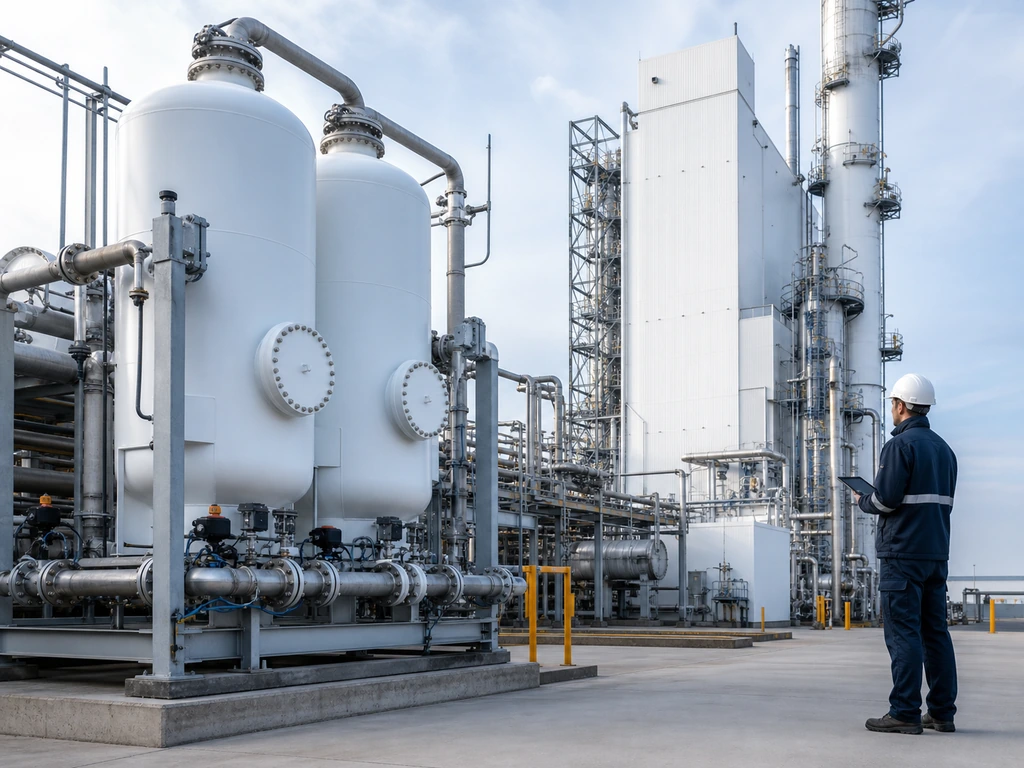
Large air separation units (ASUs) processing 300,000 normal cubic meters per hour or more use vertical radial-flow adsorber vessels packed with a layered bed: activated alumina in the lower section removes the bulk of the incoming water, and a specialty molecular sieve — typically 13X or a dedicated air separation grade — in the upper section handles the remaining water and all of the CO₂. The specification is exacting: outlet CO₂ must remain below 0.1 ppm during normal operation, with the bed designed to handle temporary inlet CO₂ spikes up to 2,000 ppm without breakthrough.
A single large ASU adsorber vessel may contain over 100 tons of molecular sieve. The regeneration gas flow alone can exceed the total process capacity of a mid-sized natural gas dehydration unit. The same adsorption principles apply — selective trapping by pore size and polarity, thermal swing regeneration — but the engineering challenge shifts from “how does it work” to “how do you manage it reliably at this scale, 24 hours a day, 365 days a year.”
Molecular Sieve Dehydration vs. Other Drying Technologies
Molecular sieve dehydration is not always the right answer. The decision depends on what you are drying, how dry it needs to be, and what else is in the stream.
| Technology | Achievable Dew Point | Water Removal Limit | Best For | Limitations |
|---|---|---|---|---|
| Molecular Sieve | Below -40°C (down to -100°C) | Below 0.1 ppmv | Cryogenic processes, LNG, ethanol dehydration, ultra-dry specifications | Higher upfront capital cost; sensitive to liquid water and hydrocarbon contamination; requires thermal regeneration |
| TEG (Triethylene Glycol) | Approximately -10°C to -40°C | 10–50 ppmv | Pipeline-quality natural gas, standard gas dehydration | Cannot achieve deep dehydration; glycol losses and foaming; BTEX emissions from regeneration |
| Silica Gel | Approximately -40°C | 5–10 ppmv | Compressed air drying, instrument air, medium-duty dehydration | Lower capacity at low relative humidity; co-adsorbs hydrocarbons |
| Activated Alumina | Approximately -40°C | 5–10 ppmv | Large-volume gas drying, high-humidity inlet streams | Lower capacity at low water partial pressure; co-adsorption issues |
The practical decision framework is straightforward. If your downstream process involves cryogenic temperatures — LNG liquefaction, NGL recovery, ethylene cold boxes — molecular sieves are mandatory; no alternative technology can achieve the required moisture specification. If you are drying natural gas to pipeline specifications and your sales contract allows a water dew point of -10°C, TEG dehydration is almost certainly more economical, with lower capital cost and simpler operation.
For intermediate cases — compressed air drying to a -40°C dew point, for example — silica gel and activated alumina compete effectively with molecular sieves on cost, and the choice often comes down to regeneration energy availability and space constraints rather than a clear technical superiority of one adsorbent over another. Where molecular sieves earn their premium is in the combination of deep moisture removal, tolerance for elevated feed temperatures, and resistance to capacity loss at low water partial pressures — characteristics rooted in the steep, Langmuir-type shape of the zeolite water adsorption isotherm.
How to Select the Right Molecular Sieve for Your Dehydration Process
Choosing a molecular sieve is not a spec-sheet comparison. It means matching three things: your feed composition, your outlet moisture target, and the long-term operational reality of regeneration, contamination, and bed life. Get the type wrong, and you lose capacity to co-adsorption. Get the supplier wrong, and you live with the consequences for 3 to 5 years.
Matching Molecular Sieve Type to Your Application
The table below provides a starting point for type selection based on the most common industrial dehydration scenarios. Use it to narrow your options, then verify against your specific feed composition — particularly the presence of any component that might co-adsorb.
| Your Application | Feed Contains | Recommended Sieve | Rationale |
|---|---|---|---|
| Natural gas with methanol injection | Methanol + H₂O | 3A | Methanol excluded from 3Å pores, recovered downstream |
| Natural gas without methanol | H₂O only (post-amine treatment) | 4A | Higher capacity than 3A, more thermally stable |
| Ethanol dehydration (fuel-grade) | Ethanol + H₂O azeotrope | 3A | Ethanol (~4.3 Å) physically excluded |
| Olefin drying (ethylene/propylene) | Olefins + trace H₂O | 3A | Prevents co-adsorption and loss of valuable product |
| Air separation pre-purification | H₂O + CO₂ (ambient air) | 13X or specialty grade | Simultaneous H₂O and CO₂ removal required |
| Refrigerant drying | HFC/HFO + trace H₂O | 3A | Refrigerant molecules above 5 Å excluded |
| Solvent/polymer system drying | Solvent + trace H₂O | Activated zeolite powder (3A/4A) | Powder form for direct dispersion |
Three questions will clarify most selection decisions. First: what besides water is in your feed? Methanol mandates 3A; CO₂ removal requirements push toward 4A or 13X. Second: how low must the outlet moisture go? If the specification is above 10 ppmv, evaluate whether a less expensive adsorbent could do the job. Third: what regeneration conditions can you provide? If your available heat source tops out at 200°C, a 4A sieve that requires 280°C for full regeneration is a poor fit, regardless of its nominal capacity advantage.
What to Look for in a Molecular Sieve Supplier
Once you know which type you need, evaluate suppliers against evidence that is relevant to your operating conditions. Product names such as 3A, 4A, and 5A describe the sieve family, but they do not by themselves guarantee identical mechanical strength, adsorption performance, or batch consistency.
- 1. Quality consistencyRequest batch-level results for water adsorption capacity, bulk density, crush strength, attrition, particle-size distribution, and package moisture. Confirm the test methods and acceptable variation limits.
- 2. Customization capabilityAssess whether particle size, cation exchange, binder system, and forming method can be adjusted when standard grades do not meet pressure-drop, selectivity, or durability requirements.
- 3. Testing transparencyAsk whether representative samples are traceable to the proposed production grade and whether performance can be verified using your feed composition, temperature, pressure, and moisture specification.
- 4. Supply resilienceReview production capacity, normal lead time, packaging and moisture protection, inventory policy, logistics options, and documented contingency plans for interruptions.
- 5. Technical supportEvaluate the supplier’s ability to assist with bed sizing, loading, activation, regeneration profiles, breakthrough interpretation, troubleshooting, and end-of-life assessment.
JALON’s full-chain model covers zeolite powder synthesis, cation exchange, forming, and finished-product testing, allowing its team to support both standard and application-specific molecular sieve grades. Buyers can review the company’s molecular sieve portfolio and discuss feed composition, outlet specifications, regeneration constraints, and sample validation with its application engineers.
References
- Herold, R.H.M. and Mokhatab, S. Optimal Design and Operation of Molecular Sieve Gas Dehydration Units — Part 1. Gas Processing News, August 2017.
- Herold, R.H.M. and Mokhatab, S. Optimal Design and Operation of Molecular Sieves for Gas Dehydration — Part 2. Gas Processing News, October 2017.
- FB Group. Molecular Sieve Dehydration Systems for Gas Drying Explained.
- Wintek Corporation. Ethanol Dehydration — Molecular Sieve.



 EN
EN  DE
DE  ES
ES  JA
JA  RU
RU  PT
PT  FR
FR  AR
AR  KO
KO  TH
TH  ID
ID