What Is Pressure Dew Point in Compressed Air?
Water shows up in compressed air systems where it was never invited. Spray guns spit. Plasma arcs wander. Cylinders stick on the first cold morning of the year. The number printed on every dryer spec sheet to prevent all of this is the pressure dew point. Plenty of people who write that number into quotes could not say what “pressure” is doing in the name.
Start with plain dew point. Air holds water vapor, and every volume of air has a temperature at which the vapor it carries can no longer stay in the gas phase. Cool the air to that temperature and condensation begins. That temperature is the dew point. Warm air holds more moisture before it saturates, cold air holds less, and that is all the physics needed for the rest of this article.
Compression changes the picture in one specific way. A compressor squeezes a large volume of ambient air into a small one, and the water vapor gets squeezed along with everything else. The vapor’s partial pressure rises, and a higher partial pressure means condensation starts at a warmer temperature. This is why a compressor “makes water” even on a dry day, and why the aftercooler and the receiver drum collect drips within minutes of a new install.

The pressure dew point (PDP) is the temperature at which condensation begins inside air held at operating pressure. The word “pressure” is the entire point of the term: it names the condition the number is valid at. The dew point in a weather forecast runs on the same physics, but in unpressurized, open air. Carrying the forecast meaning into a compressor-room conversation is exactly where the numbers stop lining up. That mismatch is where the next section picks up.
Two Numbers for the Same Air: Pressure Dew Point vs Atmospheric Dew Point
A common source of confusion is comparing a dryer rating stated at line pressure with a reading taken after the sample has expanded to atmosphere. As an approximate example, air with an atmospheric dew point of −40 °F corresponds to a pressure dew point near −3 °F at 100 psig. The exact value depends on absolute pressure and the vapor-pressure formulation used; NIST identifies the Hyland–Wexler measurements as a reference basis for compressed-gas dew-point work (NIST, 2021). Nothing is inconsistent: the two temperatures describe the same moisture concentration at different pressures.
The Same Air, Two Different Numbers
For a fixed amount of moisture, the dew point moves with pressure. Compress the air and the same vapor now sits at a higher partial pressure, so it condenses at a warmer temperature. That warmer number is the pressure dew point. Let the air expand again and the dew point slides colder; that colder number is the atmospheric dew point (ADP). Same air, same moisture content, two numbers.
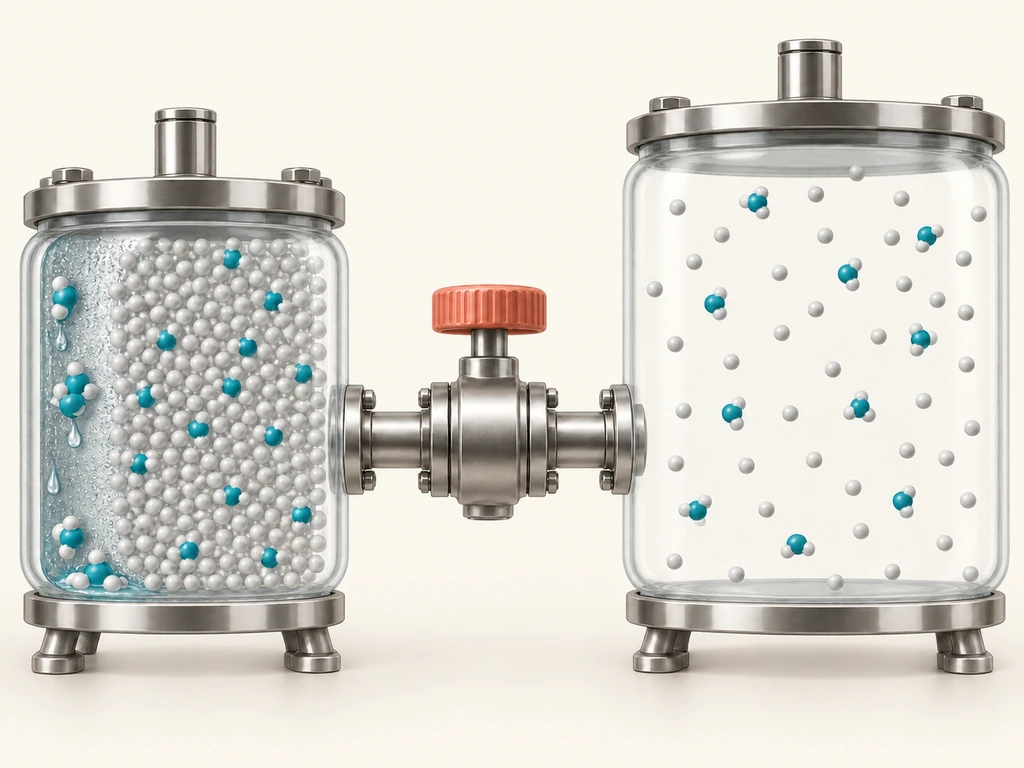
The gap widens as pressure rises. At roughly 7 bar(g) (100 psig), the example above produces a difference of about 20 °C between atmospheric and pressure dew point. This is a thermodynamic conversion, not a fixed offset: the calculation must preserve water-vapor mole fraction while changing total absolute pressure.
at 100 psig
Same air, both numbers correct.
Mixing them in a spec is how perfectly dry systems get called broken.
Before trusting any single number, it helps to know where each kind of number comes from and what it is allowed to tell you.
Where a dew point number comes from
| Source of the number | What it actually reads | Write it into a spec? |
|---|---|---|
| Dryer nameplate or datasheet | PDP at rated pressure | Yes, with the pressure stated |
| In-line sensor downstream of the dryer | PDP at line pressure | Yes |
| Portable meter sampling after a regulator | ADP of the expanded sample | Only after conversion |
| Weather forecast | Ambient dew point of outdoor air | No, different air entirely |
Converting at Your Operating Pressure
A pressure dew point calculator for compressed air must use absolute pressure, not gauge pressure. It first converts the known dew point to water-vapor pressure, scales that partial pressure by the ratio of the two absolute pressures, and then converts the new vapor pressure back to a dew point. ISO 8573-3 explicitly addresses pressure correction and the conversion of humidity quantities (ISO 8573-3, 1999). A calculator result is only meaningful when the input pressure, output pressure, temperature basis, and whether the value is a dew point or frost point are stated.
The winter case makes the distinction practical. Inside pressurized pipework, condensation follows the PDP, so the specification should sit safely below the coldest pressurized surface the air will encounter. General indoor plant air is commonly served by refrigerated dryers in the 35–50 °F (about 2–10 °C) PDP range, while subfreezing piping and moisture-sensitive processes require a lower target selected from the actual operating envelope (U.S. Department of Energy, 2016).

So read a dryer nameplate as a promise at pressure, and read a portable meter after a regulator as a colder-looking number that must be converted before it means anything. How low the promise should go is a separate question, and it has a cheaper answer than most buying processes assume.
How Low Is Low Enough: Classes, Applications, and the Cost of Going Too Far
ISO 8573-1 classifies compressed-air purity for particles, water and oil, written as three numbers; the middle number is the water class. For vapor-phase water, the commonly specified limits are Class 4 at +3 °C PDP, Class 3 at −20 °C, Class 2 at −40 °C, and Class 1 at −70 °C (ISO 8573-1, 2010). These are maximum limits, not universal application requirements. Conventional refrigerated dryers commonly deliver about 35–50 °F (2–10 °C) PDP and cannot practically cross below the freezing point, whereas regenerative desiccant dryers commonly target −40 °F/°C or lower (CAGI, 2017).
Set the target from the process, not from the catalogue. Two factors decide it: the coldest pressurized surface the air will touch, and how sensitive the end use is to moisture. Everything past that point is spending, not quality.
Drying beyond the process requirement adds real cost. Deeper targets often move a system from refrigeration to adsorption and increase regeneration demand. CAGI reports that heatless regenerative dryers can consume up to about 18% of total airflow as purge, while heated designs may reduce purge demand to roughly 5–10%, depending on configuration (CAGI, 2017). The correct target is therefore the least stringent PDP that still protects the coldest surface and the moisture sensitivity of the process.
Sensible PDP targets by application
| Application | Sensible PDP target | Typical route |
|---|---|---|
| General indoor plant air | +3 °C (Class 4) | Refrigerated dryer |
| Outdoor or seasonal lines, freeze protection | −20 °C band (Class 3) | Desiccant dryer |
| Standard industrial and instrument air | −40 °C (Class 2) | Desiccant dryer, alumina-based beds |
| Moisture-critical process air | Process-specific; down to −70 °C (Class 1) when validated | Desiccant dryer, often with molecular-sieve polishing |
The right-hand column of that table is doing more work than it appears to. Two systems can both say “desiccant dryer” on the quote and deliver completely different dew points, because the number is delivered by the media inside the vessel.
What Actually Delivers the PDP: Drying Technology and the Media Inside
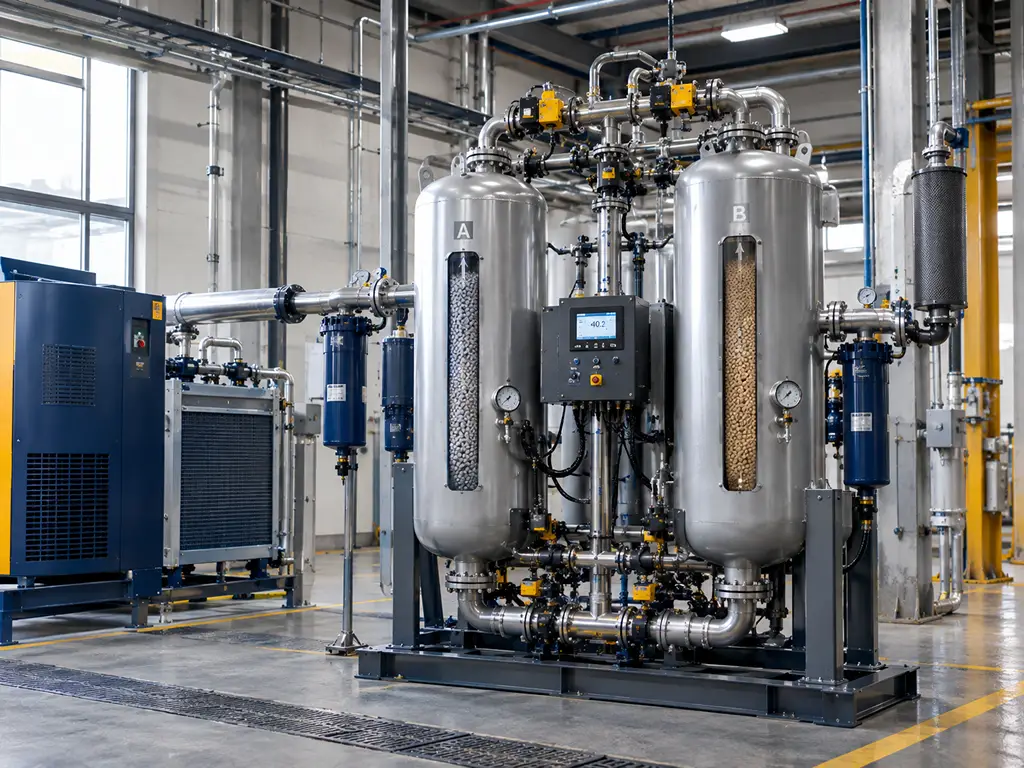
Every dew point figure on a quote is delivered by hardware and by stuff inside a vessel: a refrigerant circuit, or a bed of adsorbent beads. The hardware sets the ceiling. The beads set everything deeper, and they are where most dew point promises are quietly won or lost.
Refrigeration Has a Floor
A refrigerated dryer chills the air and drains the condensate. Conventional designs commonly deliver about 35–50 °F (2–10 °C) PDP; pushing the evaporator below 32 °F risks freezing, so this technology is not the route to subfreezing PDP targets (CAGI, 2017). It is well suited to many general plant-air duties, but freeze protection and deeper instrument-air targets normally require adsorption or another suitable drying method.
Activated Alumina: The High-Humidity Workhorse
Activated alumina is porous aluminum oxide and is widely used where the bed must remove a comparatively high water-vapor load before the outlet reaches a deep-dry condition. It should not, however, be described as tolerant of liquid-water slugs: bulk liquid and oil aerosols should be removed upstream because they overload or foul any regenerative desiccant bed. A representative JALON industrial grade declares static water adsorption of at least 17 %wt at 60% RH and 25 °C, bead sizes of roughly 1–10 mm, and attrition loss at or below 0.3 %wt; special grades list 20–22 %wt under the stated test conditions (activated alumina specifications). CAGI notes that desiccant replacement intervals are application-dependent and commonly fall around three to five years when pretreatment and regeneration are maintained (CAGI, 2017).
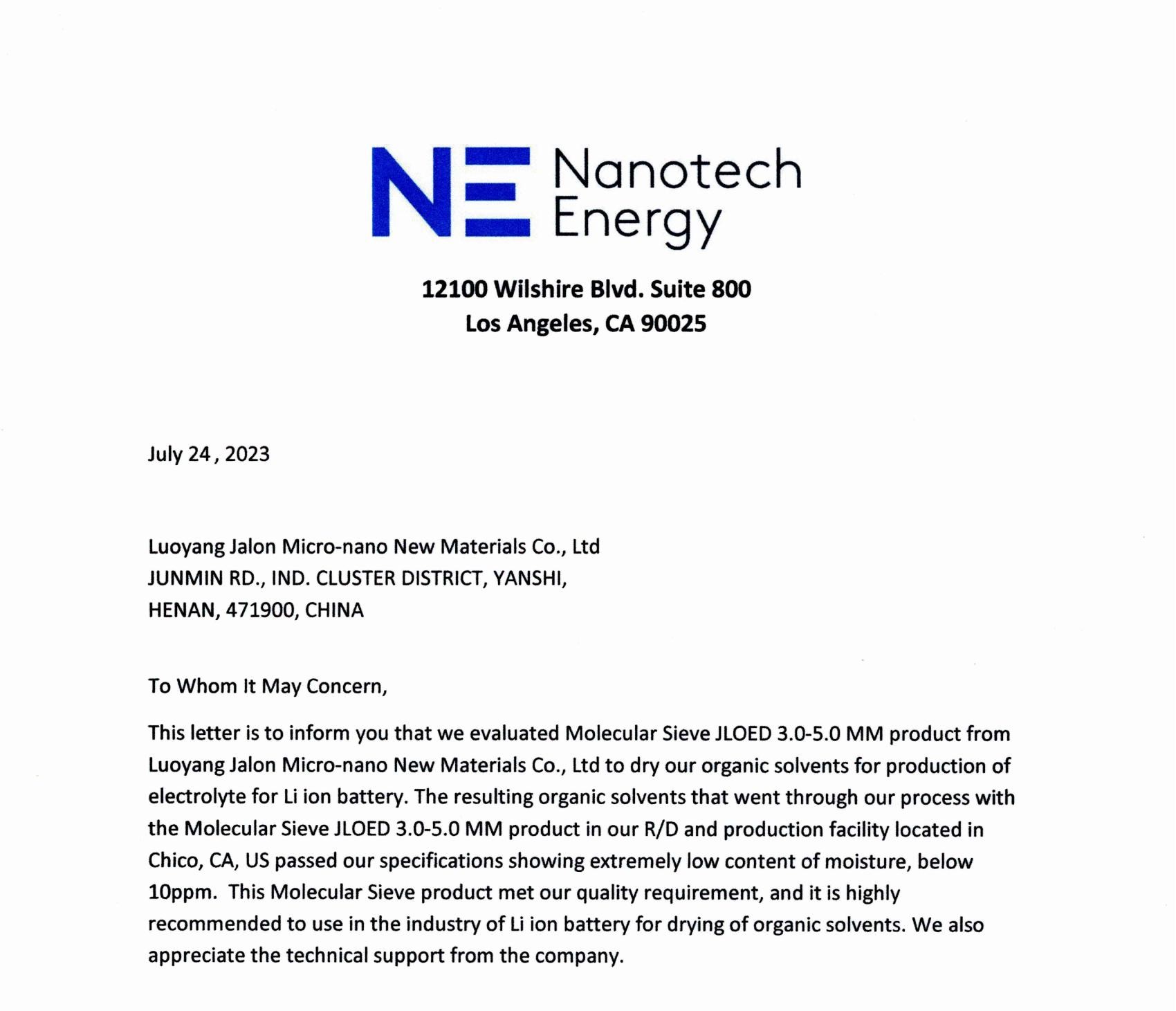
JALON provides activated-alumina and molecular-sieve grade data for compressed-air dryer selection, including stated test conditions for capacity, particle size, crush strength and attrition. Share the operating pressure, inlet conditions and target PDP for a grade recommendation.
Request Grade DatasheetsMolecular Sieve: The Deep-Dry Grades
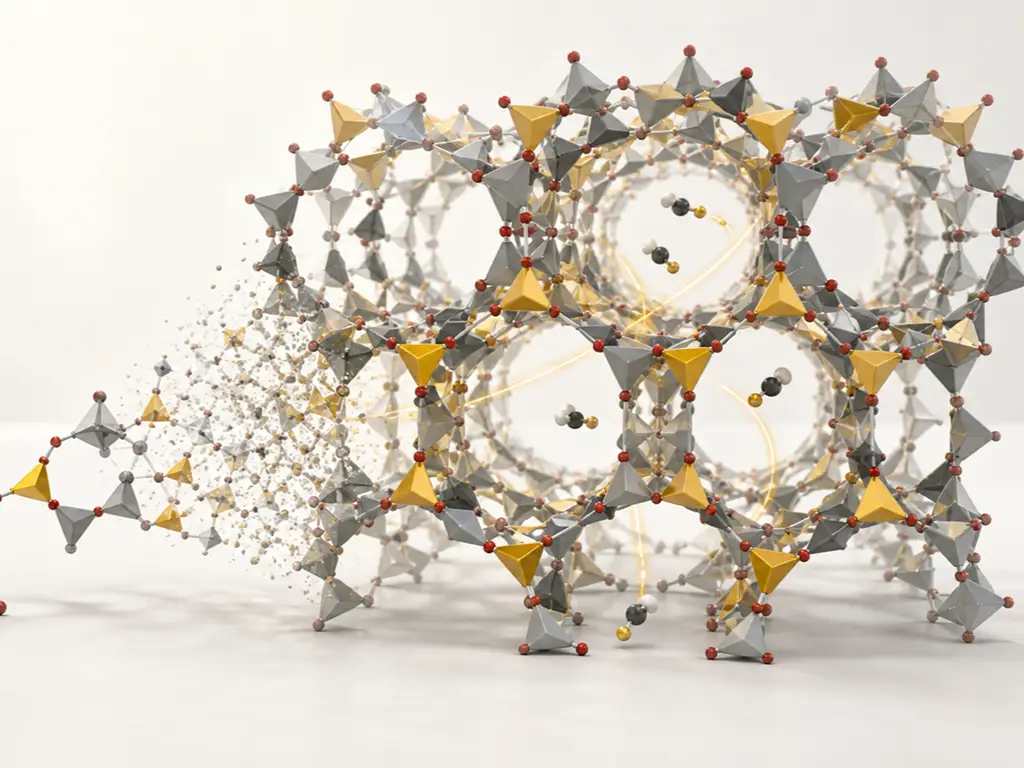
Molecular sieve is a crystalline zeolite with a uniform pore structure and strong water affinity at very low humidity, which is why it is used for the deepest dew-point duties. Common compressed-air grades include 4A for deep drying and 13X where water and CO₂ removal are both relevant. A representative JALON 4A specification lists static moisture capacity of at least 22.5 %wt at 75% RH and crush strength of 40–80 N depending on bead size; a representative 13X specification lists at least 26.5 %wt water capacity and 18.5 %wt CO₂ capacity under its stated methods (4A molecular sieve specifications; 13X molecular sieve specifications). These are product test values rather than guaranteed working capacities in every dryer. CAGI recommends using the dryer manufacturer’s specified desiccant and protecting the bed from oil carryover with upstream coalescing filtration (CAGI, 2017).
Why −40 °C Is Delivered as a Layered Bed
Layered beds can combine a high-capacity upstream desiccant with molecular sieve as the final polishing layer, but the arrangement is not universal and must follow the dryer manufacturer’s flow direction, regeneration method and loading drawing. The U.S. Department of Energy notes that more than one desiccant may be used for special drying applications and that molecular sieve is added as the final drying agent where very low dew points are required (U.S. Department of Energy, 2016). JALON’s air-drying application guidance provides the corresponding internal product-selection context.
A −40 °C pressure dew point is a media promise: activated alumina carries the load down to the −40 °C class, and deeper targets belong to molecular sieve.
That sentence is worth pinning above the procurement desk, because it compresses into one line how a bed should be specified. The working version of it, with the checking points attached to each row, looks like this.
Media selection matrix for desiccant beds
| Media | Comfortable PDP class | Humidity spikes & liquid water | Saturation behavior | Typical bed position | Confirm before you order |
|---|---|---|---|---|---|
| Activated alumina | Commonly to the −40 °C class in a properly designed dryer | Handles high vapor load; protect from liquid carryover | Gradual capacity fade | Upstream layer where specified | Static adsorption ≥17 %wt at RH60, attrition ≤0.3 %wt |
| Molecular sieve 4A | −40 °C class and below | Strong at low humidity, less slug-tolerant | Saturates faster under liquid loading | Deep layer | Static adsorption ≥22.5 %wt at RH75, crush 40–80 N |
| Molecular sieve 13X | Deepest class, also controls CO₂ | Best very-low-humidity affinity | Sensitive to oil fouling | Deep polishing layer | H₂O ≥26.5 %wt, CO₂ ≥18.5 %wt |
| Layered bed, alumina then sieve | −40 °C class as standard | Slug protection up front, deep dry behind | Sieve life extended | Bottom-up per vendor drawing | Media-by-media datasheets plus the loading drawing |
Order against parameters rather than adjectives. The checklist that maps to the matrix above: static capacity at a stated relative humidity, crush strength averaged over a stated bead count, attrition loss, and the bead size band. When swapping media in an existing vessel, confirm the regeneration settings still suit the new fill. Insist on the loading drawing, too: a correctly specified bed installed wrong will drift back wet all the same.
When the Number Lies: Measurement Error and the Real Failure Modes
A dew point number can be wrong in two directions: the bed underperforms, or the measurement lies. Run the checks in this order, because the first one is free and the rest cost downtime.
Check the measurement: place the sensor downstream of the dryer and record the pressure, temperature, sample arrangement, stabilization time and calibration status. If the sample is expanded before measurement, apply and document the pressure correction required by ISO 8573-3 (ISO 8573-3, 1999).
Check the duty point: compare actual flow, inlet pressure, inlet temperature and ambient conditions with the dryer’s rated conditions. ISO 7183 treats PDP, flow, pressure drop, compressed-air loss and power consumption as measured performance parameters rather than isolated nameplate claims (ISO 7183, 2007).
Check the media and pretreatment: confirm the specified desiccant, loading arrangement, regeneration settings and the condition of upstream water separators and coalescing filters. Oil aerosol and liquid carryover can reduce adsorption performance and bed life (CAGI, 2017).
Check the last stretch of pipe: condensate carried over or re-evaporated by warm machinery downstream can put water at the point of use even with a healthy bed and a healthy reading.
The order matters more than the list. A wet-looking number from a flooded sample line or an over-throttled sensor has sent plenty of healthy beds to the scrap yard. The measurement gets checked before the media gets condemned, for exactly that reason.
Close the loop on paper, too. An acceptance clause that cannot wiggle looks like this:
Acceptance clause
A stated water class should be tied to a defined test condition and measurement method. ISO 8573-1 defines the purity classes, while ISO 8573-3 covers humidity sampling, pressure correction, uncertainty and reporting (ISO 8573-1, 2010; ISO 8573-3, 1999).
Reading a PDP Promise Like a Buyer
Read the quote with the complete duty point in view. The dryer type establishes the feasible PDP range, while media selection, pretreatment, regeneration settings and operating load determine whether that performance is sustained. Put the target PDP, operating pressure, rated flow, inlet temperature, ambient condition, acceptable air loss, test method and duration directly into the guarantee. For replacement media, also specify capacity test conditions, crush strength, attrition, size band and the approved loading drawing. This prevents a nominally equivalent substitution from changing the hydraulic or adsorption behavior of the bed.
Match Fill Media to Your Dew Point Target
JALON can compare activated-alumina, 4A and 13X grades against your operating pressure, inlet temperature, flow, regeneration method and required PDP. The recommendation can include relevant grade datasheets, stated test conditions, particle-size options and samples for qualification before a full bed change.
Request Free Samples & Test ReportsReferences
- ISO. ISO 8573-1:2010 — Compressed Air — Part 1: Contaminants and Purity Classes. 2010.
- ISO. ISO 8573-3:1999 — Compressed Air — Part 3: Test Methods for Measurement of Humidity. 1999.
- ISO. ISO 7183:2007 — Compressed-Air Dryers — Specifications and Testing. 2007.
- U.S. Department of Energy. Improving Compressed Air System Performance: A Sourcebook for Industry, Third Edition. 2016.
- Compressed Air and Gas Institute. Compressed Air and Gas Drying. 2017.
- Compressed Air and Gas Institute. Compressed Air Treatment. 2017.
- National Institute of Standards and Technology. Dew-Point Measurements for Water in Compressed Gases. 2021.

 EN
EN  DE
DE  ES
ES  JA
JA  RU
RU  PT
PT  FR
FR  AR
AR  KO
KO  TH
TH  ID
ID