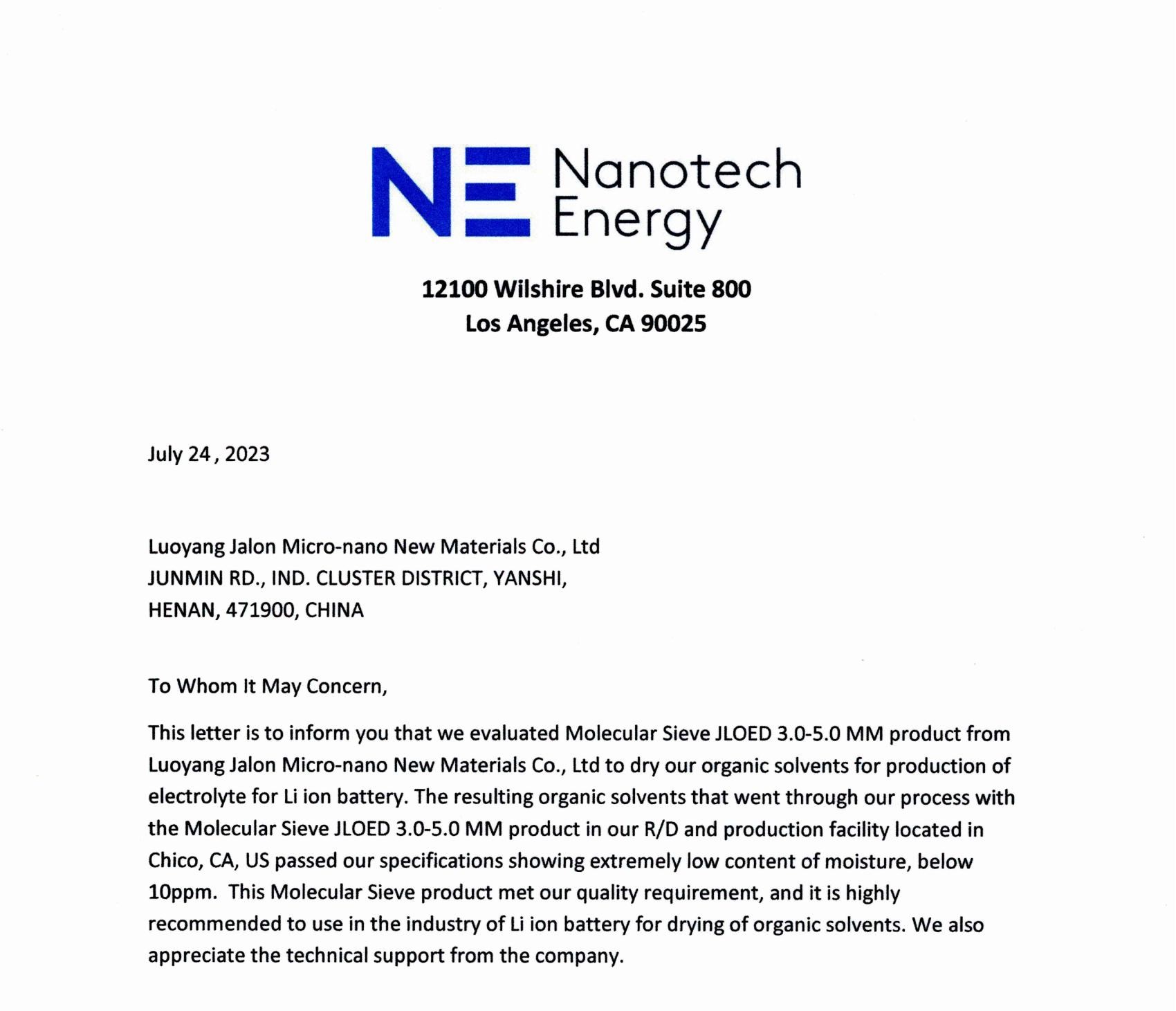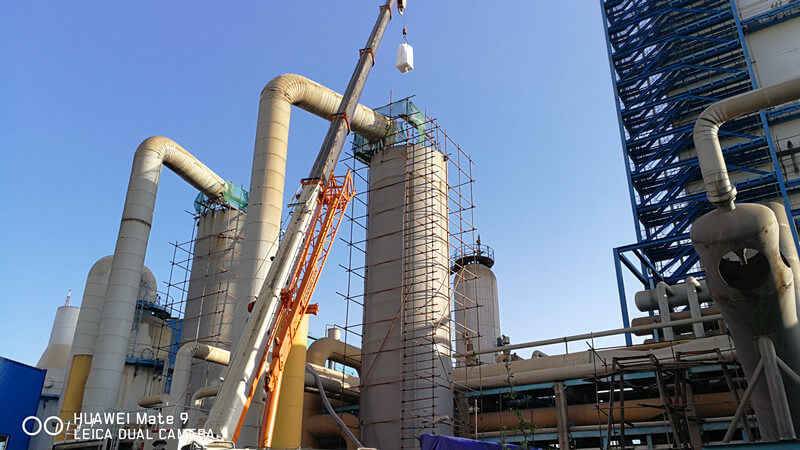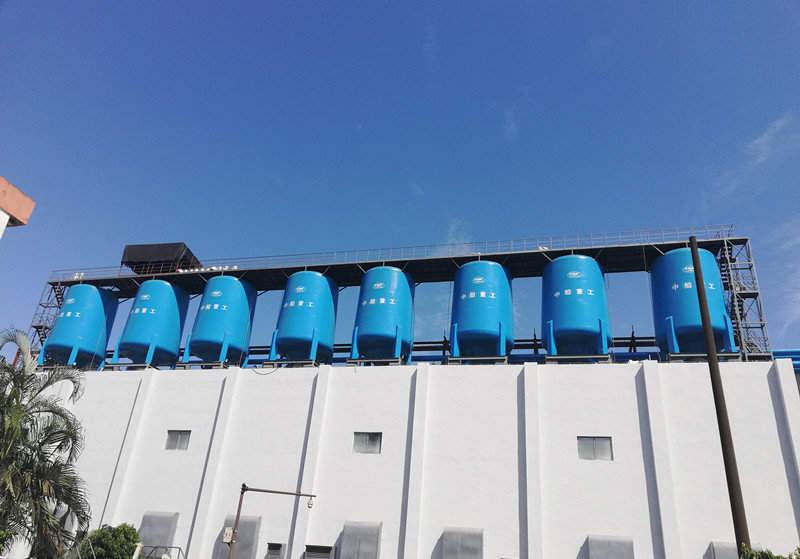
Petrochemical catalysts control the rate and selectivity of many reactions used to turn crude-oil fractions and light hydrocarbons into fuels, olefins, aromatics, and polymer feedstocks. They are not one interchangeable product category. An FCC powder, a fixed-bed hydrotreating catalyst, a reforming catalyst, and a polymerization catalyst differ in active phase, pore structure, particle form, operating environment, and acceptance tests.
This guide organizes catalyst selection by process duty. It explains the principal refinery and petrochemical catalyst families, distinguishes catalysts from carriers and guard adsorbents, identifies the parameters behind high performance petrochemical catalysts, and shows how to qualify a material without relying on headline surface-area or activity claims alone.
What Petrochemical Catalysts Do
A catalyst provides a lower-energy reaction pathway and is regenerated within the catalytic cycle, although the commercial material still loses performance over time through coke deposition, poisoning, thermal damage, or mechanical loss. Refinery conversion units use catalysts to crack large molecules, remove sulfur and nitrogen, rearrange carbon skeletons, add or remove hydrogen, and build larger molecules from olefins. The U.S. Energy Information Administration distinguishes cracking, hydrocracking, reforming, and other upgrading operations as separate refinery processes because each performs a different chemical task.
The word catalyst may refer to the complete commercial particle or only its active component. A finished catalyst commonly contains several functional elements:
- Active phase: the metal, metal sulfide, oxide, acid site, or organometallic center responsible for the reaction.
- Support or matrix: alumina, silica-alumina, zeolite, or another porous solid that disperses the active phase and helps control heat and mass transfer.
- Binder and filler: materials that give the particle its required strength, density, and forming behavior.
- Promoter or modifier: an added element that changes activity, selectivity, stability, or resistance to contaminants.
Catalyst is not the same as adsorbent. Commercial 3A, 4A, 5A, and 13X molecular sieves are normally specified for adsorption and separation. Catalytic zeolites such as H-form or rare-earth-modified Y, ZSM-5, and beta are prepared with the acidity, composition, and stability required for reaction duty. A guard adsorbent may protect a catalyst without catalyzing the main process reaction.
Which Catalyst Is Used in Oil Refinery Units?
There is no single catalyst used in oil refinery operations. The correct material follows the reaction, feed contaminants, reactor design, and target product slate. The table below summarizes widely used catalyst systems without implying that every licensed process uses the same formulation.
| Process | Typical commercial catalyst system | Primary function | Important selection variables |
|---|---|---|---|
| Fluid catalytic cracking (FCC) | USY or related Y-zeolite in a matrix; ZSM-5 may be added | Convert gas oil into gasoline, LPG, and light olefins | Activity, product selectivity, metals tolerance, attrition, particle-size distribution |
| Hydrotreating | Sulfided CoMo or NiMo, commonly supported on alumina | Remove sulfur and nitrogen; saturate selected unsaturated compounds | Feed sulfur and nitrogen, hydrogen partial pressure, pore distribution, cycle length |
| Hydrocracking | Bifunctional system combining hydrogenation metals with zeolitic or amorphous acidic support | Crack heavy feeds in hydrogen and produce cleaner, lighter products | Metal–acid balance, conversion level, middle-distillate selectivity, contaminant tolerance |
| Catalytic reforming | Platinum-based, often promoted with Re or Sn on chlorided alumina or another engineered support | Raise naphtha octane and produce aromatics and hydrogen | Feed pretreatment, chloride and water control, coke rate, selectivity, regeneration mode |
| Light-paraffin isomerization | Process-dependent Pt/chlorided-alumina or zeolite-based systems | Increase branching and gasoline octane | Feed water and sulfur, operating temperature, chloride management, equilibrium conversion |
| Propane dehydrogenation | Commercial Pt–Sn- or chromium-oxide-based formulations, depending on technology | Convert propane into propylene | Propylene selectivity, coke formation, regeneration frequency, environmental constraints |
| Olefin polymerization | Ziegler–Natta, chromium-based, or metallocene/single-site systems | Control polymer growth and final resin architecture | Molecular-weight distribution, comonomer response, stereospecificity, catalyst productivity |
FCC provides a useful example of why the complete particle matters. Y-type zeolite supplies much of the cracking activity, while the matrix, binder, and filler influence accessibility, bottoms conversion, heat transfer, strength, and fluidization. ZSM-5 is commonly used as an additive to increase light-olefin production or gasoline octane; it is not a direct replacement for the Y-zeolite component. Likewise, hydrocracking catalysts are bifunctional: the acidic component cracks and isomerizes, while the metal function performs hydrogenation and dehydrogenation.
How Active Sites, Pores, and Supports Control Performance
Acid Sites and Shape Selectivity
In catalytic aluminosilicate zeolites, framework aluminum creates negative charge that can be balanced by protons to form Brønsted acid sites. Lewis acid sites may also contribute, depending on preparation and treatment. The combination of acidity and pore topology controls which molecules reach a site, which transition states can form, and how quickly products leave.
Pore dimensions must be described accurately. FAU-type Y and X zeolites have a 12-membered-ring window of roughly 7.4 Å leading into a larger supercage. The frequently used “10 Å molecular sieve” label for 13X is nominal and should not be interpreted as a 10 Å transport window. ZSM-5 has intersecting medium-pore channels of approximately 5–6 Å, which contributes to its shape-selective behavior.

Metals and Metal Sulfides
Supported metals can activate hydrogen, remove hydrogen, or facilitate carbon–carbon rearrangement. Hydrotreating commonly uses sulfided CoMo or NiMo phases, while noble-metal systems are used where their higher intrinsic activity and process-specific selectivity justify their cost. The support is not passive: pore architecture, surface chemistry, and metal–support interaction affect dispersion and access to active sites.
Why Formulation Must Match the Reactor
A fluidized FCC catalyst must circulate, separate from vapor, and survive repeated contact and regeneration. A fixed-bed hydroprocessing catalyst must carry bed load, maintain low and predictable pressure drop, and provide diffusion paths suited to the feed. Polymerization catalysts must control resin structure and respond consistently to cocatalyst and comonomer. A laboratory activity number has limited value if the test feed, conversion, temperature, pressure, space velocity, and deactivation history do not resemble the proposed service.
What Defines High Performance Petrochemical Catalysts?
High performance is application-specific. The best material is not necessarily the one with the highest initial conversion or surface area. It is the formulation that maintains the required yield, selectivity, product quality, hydraulic behavior, and cycle length within the unit’s operating window.
Activity
Conversion at a defined temperature, pressure, feed composition, and space velocity—not an unqualified maximum value.
Selectivity
Yield of the target product relative to gas, coke, light ends, or other undesirable products at comparable conversion.
Stability
Rate of activity and selectivity loss under realistic time-on-stream, contaminant, steam, and regeneration conditions.
Mechanical Fit
Particle size, density, crush strength, attrition resistance, and pressure-drop behavior suited to the reactor.
A useful comparison therefore normalizes performance at the same conversion or severity. A catalyst showing higher initial conversion at a higher temperature is not automatically superior. For FCC, the comparison should include product yields and coke at consistent conversion and catalyst-to-oil ratio. For fixed beds, activity must be considered alongside pressure drop, diffusion, contaminant pickup, and expected run length.
How Catalyst Performance Is Evaluated Before Commercial Use
Commercial catalyst qualification is a staged exercise rather than a single activity test. The objective is to reduce uncertainty at each scale while preserving the variables that control performance in the plant. A useful program begins with material characterization, moves through reaction screening and accelerated aging, and ends with pilot or demonstration evidence that can be related to the intended reactor.
Start with a Defined Reference Case
Before comparing samples, the buyer and supplier should agree on a reference feed, catalyst pretreatment, reactor configuration, operating severity, product-analysis method, and calculation basis. Conversion without selectivity is incomplete, and selectivity without a closed material balance can be misleading. Gas, liquid, coke, and water or heteroatom products should be included where relevant. Results should also state whether they are reported on a fresh-feed, converted-feed, carbon, mass, or molar basis.
Feed representativeness is especially important for refinery catalysts. A model compound can isolate a reaction mechanism, but it does not reproduce the diffusion limits, competing adsorption, metals, nitrogen species, sulfur distribution, and boiling range of a commercial stream. Model-feed testing is valuable for screening; final qualification should use a representative feed or a documented surrogate designed around the contaminants and molecules that control performance.
Control Activation and Pretreatment
Many catalysts do not enter service in their final active state. Hydrotreating and hydrocracking materials may require controlled sulfiding. Noble-metal catalysts may require drying, reduction, or careful chloride and water management. Zeolite powders may be converted to a protonic or exchanged form and then calcined. Polymerization catalysts can be extremely sensitive to oxygen and moisture. If two samples receive different pretreatment, the test may be comparing activation histories rather than catalyst quality.
The qualification protocol should therefore record gas composition, temperature ramp, pressure, hold time, flow rate, and endpoint used during activation. Exotherms must be controlled, particularly in large fixed beds where a laboratory heating rate cannot simply be copied at commercial scale. The same requirement applies after shutdown: preservation under inert gas, controlled passivation, or protection from ambient moisture may determine whether a sample remains representative.
Measure Stability, Not Only Initial Activity
Fresh-catalyst activity can favor a formulation that deactivates quickly. Time-on-stream data show whether conversion, selectivity, pressure drop, or product quality is drifting. Accelerated aging can expose hydrothermal instability or metals sensitivity, but the aging treatment must be correlated with the plant. Excessively severe steaming or contaminant loading may change the deactivation mechanism and rank samples incorrectly.
For FCC materials, equilibrium or laboratory-deactivated samples often provide a more realistic comparison than fresh powder. For fixed-bed catalysts, a useful evaluation may include start-of-run activity, deactivation slope, end-of-run temperature projection, contaminant profile, and pressure-drop behavior. For guard materials, the key result is usually a breakthrough curve under realistic concentration, temperature, pressure, flow, and competing-species conditions—not equilibrium capacity measured in a static container.
Translate Laboratory Data into Reactor Consequences
Scale-up requires separating intrinsic kinetics from heat transfer, external-film resistance, and intraparticle diffusion. Crushing a commercial pellet for a microreactor can remove the very diffusion limitation that controls performance in the plant. Conversely, testing a large pellet at a low laboratory flow may create transfer limitations that obscure the material’s intrinsic behavior. Particle dimensions and gas or liquid velocity should therefore be chosen deliberately, and the resulting data should be checked for transport artifacts.
A pilot test is most useful when it answers a defined scale-up question: whether product selectivity survives a realistic residence-time distribution, whether contaminants move through a layered bed as predicted, or whether pressure drop remains stable after repeated cycles. Pilot data do not automatically guarantee commercial performance, but they narrow the gap between a material certificate and a reactor guarantee.
Specifications and Test Methods That Belong in the Purchase Order
A defensible specification combines a measured property with its method, sample preparation, and test conditions. “High surface area” or “high adsorption capacity” is not an acceptance criterion.
| Parameter group | Typical measurements | Why it matters | Qualification caution |
|---|---|---|---|
| Chemical composition | Active metal, promoter, sodium, chloride, sulfur, Si/Al ratio, trace contaminants | Defines active phase and sensitivity to feed or activation conditions | Specify analytical method and whether results are dry basis |
| Phase and structure | XRD phase identity and crystallinity; microscopy where needed | Confirms the intended zeolite or support phase and detects unwanted phases | Do not equate relative crystallinity from different methods without correlation |
| Texture | BET area, pore volume, pore-size distribution | Influences dispersion, accessibility, diffusion, and contaminant capacity | State degassing and measurement conditions; one number cannot describe the full pore network |
| Mechanical properties | Particle-size distribution, bulk density, crush strength, attrition | Controls loading, fluidization, dust generation, pressure drop, and inventory loss | Use a method appropriate to the particle form and reactor duty |
| Performance | Conversion, selectivity, product yields, contaminant breakthrough, deactivation rate | Connects material properties to process results | Require a defined feed, reactor protocol, balance closure, and basis of calculation |

ASTM D4179 covers single-pellet crush strength for formed catalysts and carriers. ASTM D5757 evaluates the relative attrition characteristics of FCC catalysts using air jets and is not a universal attrition method for every catalyst shape. ASTM also maintains methods for surface area, pore volume, particle-size distribution, packing density, and related catalyst properties. The correct method must match the material.
Minimum Supplier Qualification Checklist
- Request a batch-specific certificate of analysis with measured values, not only catalog limits.
- Confirm sampling procedure, test methods, test conditions, and release criteria.
- Compare pilot or bench data under a representative feed and severity.
- Review batch-to-batch trends for critical chemical and mechanical properties.
- Define change-control requirements for raw materials, formulation, forming, and calcination.
- Agree on storage, activation, loading, startup, and troubleshooting responsibilities.
Deactivation and Failure: Diagnose Before Replacing
Catalyst performance can decline through several mechanisms, and the remedy depends on the cause.
- Coke deposition: carbonaceous material covers active sites or blocks pores. Controlled regeneration may restore activity where the catalyst and unit are designed for it.
- Poisoning: sulfur, nitrogen compounds, arsenic, silicon, alkali metals, or other contaminants interact with active sites. Reversibility depends on the contaminant and catalyst.
- Sintering and structural damage: excessive temperature can agglomerate metals, collapse surface area, or damage a zeolite framework. This loss is often irreversible.
- Metals contamination: nickel, vanadium, iron, and other feed metals can change selectivity and promote gas or coke in FCC service.
- Mechanical failure: attrition, pellet breakage, poor loading, or damaged internals can create fines, channeling, and abnormal pressure drop even when intrinsic activity remains acceptable.
Water deserves careful wording. It can competitively adsorb on acid sites, disturb chloride balance in some reforming and isomerization systems, or contribute to hydrothermal dealumination at high temperature. It should not be described as a universally irreversible poison. Diagnosis should combine feed history, temperature profile, pressure drop, product distribution, spent-catalyst analysis, and upstream guard-bed performance.
Coke is also not a single failure signature. In zeolite catalysis it can cover sites, restrict diffusion, or block pore mouths, with the dominant mechanism depending on topology, crystallite size, feed, and operating severity. That is why regeneration temperature and oxygen concentration must follow the catalyst supplier’s procedure rather than a generic burn-off recipe.
Feed Preparation and Guard Beds Protect Catalyst Value
The main reaction catalyst is often the most visible material in a unit, but its life can be determined upstream. Feed filters, coalescers, dryers, sulfur or chloride traps, and metals guards reduce the contaminant load reaching sensitive active sites. These materials should be selected as part of one protection strategy rather than as unrelated consumables.
Guard-bed design starts with a contaminant balance. The engineer needs the normal and upset concentrations, allowable outlet level, competing components, temperature, pressure, phase, flow, and planned run length. A static capacity measured with a pure contaminant is rarely sufficient because commercial breakthrough depends on mass transfer and competition. The design also needs margin for inlet maldistribution, sampling uncertainty, and the portion of the bed occupied by the mass-transfer zone.
Layering can be useful when the feed contains several contaminants or particulate carryover, but each layer changes hydraulics and must be mechanically compatible with its neighbors. A coarse support layer cannot compensate for a poor inlet distributor, and a high-capacity adsorbent cannot protect the catalyst after its breakthrough front reaches the outlet. Differential pressure and outlet contaminant measurements should be trended together: rising pressure drop may indicate fines, liquid carryover, or deposits, while an early chemical breakthrough with normal pressure drop points toward capacity, competition, temperature, or channeling.
Replacement criteria should be established before startup. Waiting for the main catalyst to show activity loss makes the guard bed a lagging indicator. Where continuous analysis is impractical, scheduled samples, parallel analyzers, lead–lag vessels, or conservative service-time limits can provide earlier warning. The economic calculation should compare the remaining value of the guard material with the cost and production risk imposed on the protected catalyst.
Loading, Startup, and Operation Are Part of Catalyst Performance
A well-qualified catalyst can still underperform if it is stored, loaded, activated, or operated incorrectly. Delivery inspection should confirm container integrity, lot identity, moisture protection, particle-size condition, and the absence of abnormal fines. Retained samples should be representative and traceable to the installed lots. Storage limits for humidity, temperature, oxygen exposure, and shelf life depend on the formulation and should follow the supplier’s written instructions.
Fixed-bed loading aims to produce uniform density without segregation, bridging, pellet damage, or voids near vessel walls and internals. The loading method, drop height, sock or dense-loading equipment, personnel movement, and leveling procedure can all affect the final bed. Recorded loaded volume and mass provide an immediate check against the expected bulk density. Distributor condition, support media, screens, thermowells, and hold-down hardware should be inspected before the material covers them.
Startup converts an installed material into an operating catalyst. Drying removes free or adsorbed water; activation establishes the intended oxidation, reduction, sulfide, acid, or chloride state; feed introduction brings the catalyst to reaction conditions. Temperature ramps and reactant introduction must control local exotherms and prevent condensation. In multiphase fixed beds, wetting and liquid distribution also influence the observed startup response.
Once on stream, performance should be trended against normalized conditions. Raw conversion alone may fall when feed quality changes even if the catalyst has not deteriorated. Useful indicators include weighted-average bed temperature, temperature profile, product selectivity, hydrogen consumption, pressure drop, feed contaminants, and severity required to maintain specification. A rising temperature requirement at constant normalized performance is often more informative than a single product result.
End-of-run planning should distinguish chemical deactivation from hydraulic limitation and equipment problems. Spent-catalyst sampling by bed depth can reveal where metals, coke, poisons, or loss of surface area accumulated. Comparing those profiles with feed and operating history improves the next guard-bed design, catalyst grading scheme, or changeout interval. The most valuable post-run report closes the loop between specification, operation, failure mechanism, and the next purchase.
Catalyst, Carrier, Guard Bed, or Adsorbent?
Procurement becomes clearer when each material is assigned to its real role:
- Main catalyst: directly changes the feed’s chemical structure. Buy on reaction performance, stability, and process guarantees.
- Catalyst support or carrier: disperses the active phase and provides pore structure and mechanical form. Buy on phase purity, texture, chemistry, and strength.
- Guard material: captures a contaminant before it reaches the main catalyst. Buy on dynamic capacity, mass-transfer behavior, and mechanical integrity under the actual feed.
- Separation adsorbent: separates molecules by equilibrium affinity or diffusion. Buy on working capacity, selectivity, regenerability, and cycle performance.
This distinction also defines the appropriate supplier. Licensed main catalysts normally require licensor approval and process-specific performance validation. Zeolite powders, molecular sieves, activated alumina, carriers, and guard materials can often be qualified through a parameter-based program, but they must not be presented as interchangeable with a licensed reaction catalyst.
How to Select Petrochemical Catalysts and Supporting Materials
- Define the reaction and product target. State feed composition, conversion, selectivity, product specification, throughput, and operating envelope.
- Identify the deactivation risks. Quantify water, sulfur, nitrogen, metals, oxygenates, particulates, and upset scenarios.
- Match particle form to reactor hydrodynamics. Fixed, moving, slurry, and fluidized beds impose different strength, attrition, density, and heat-transfer requirements.
- Translate process needs into acceptance tests. Use condition-defined activity and capacity measurements plus suitable chemical, structural, and mechanical methods.
- Validate scale-up. Correlate laboratory screening with pilot or commercial performance, and document changes in feedstock, activation, and regeneration.
- Plan end of run. Establish monitoring limits, regeneration criteria, changeout logistics, and spent-material handling before startup.
Jalon’s relevant scope is upstream and supporting material rather than a claim to replace every licensed refinery catalyst. The company can provide zeolite powders, formed molecular sieves, activated alumina, and application-specific adsorbent or carrier candidates, together with batch documentation and sample evaluation. Buyers can review the adsorbent and catalyst-support portfolio and submit their feed composition, operating conditions, target contaminants, and required test methods for technical review.
Qualify the Material Against the Duty
Share the process role, feed conditions, operating window, particle form, and acceptance methods. Jalon’s application team can recommend a molecular sieve, zeolite powder, activated alumina, guard material, or carrier candidate for evaluation.
Request a Technical ReviewReferences
- U.S. Energy Information Administration. “Refining Crude Oil: The Refining Process.”
- U.S. Environmental Protection Agency. “AP-42, Chapter 5.1: Petroleum Refining.”
- ASTM International. “Catalyst Standards.”
- Vogt, E. T. C., and Weckhuysen, B. M. “Fluid Catalytic Cracking: Recent Developments on the Grand Old Lady of Zeolite Catalysis.” Chemical Society Reviews, 2015.
- Al-Zareer, M. et al. “Synthesis and Performance Evaluation of Hydrocracking Catalysts: A Review.” Journal of Industrial and Engineering Chemistry, 2020.
- Guisnet, M., Magnoux, P., and Moljord, K. “Modes of Coking and Deactivation of Acid Zeolite Catalysts.” ACS Symposium Series, 1996.
- Atanga, M. A. et al. “Propane to Olefins Tandem Catalysis: A Selective Route towards Light Olefins Production.” Chemical Society Reviews, 2021.



 EN
EN  DE
DE  ES
ES  JA
JA  RU
RU  PT
PT  FR
FR  AR
AR  KO
KO  TH
TH  ID
ID