Molecular Sieve Adsorbents: A Complete Guide to Types, Selection, and Sourcing
What Are Molecular Sieve Adsorbents? The Simple Science Behind Selective Adsorption
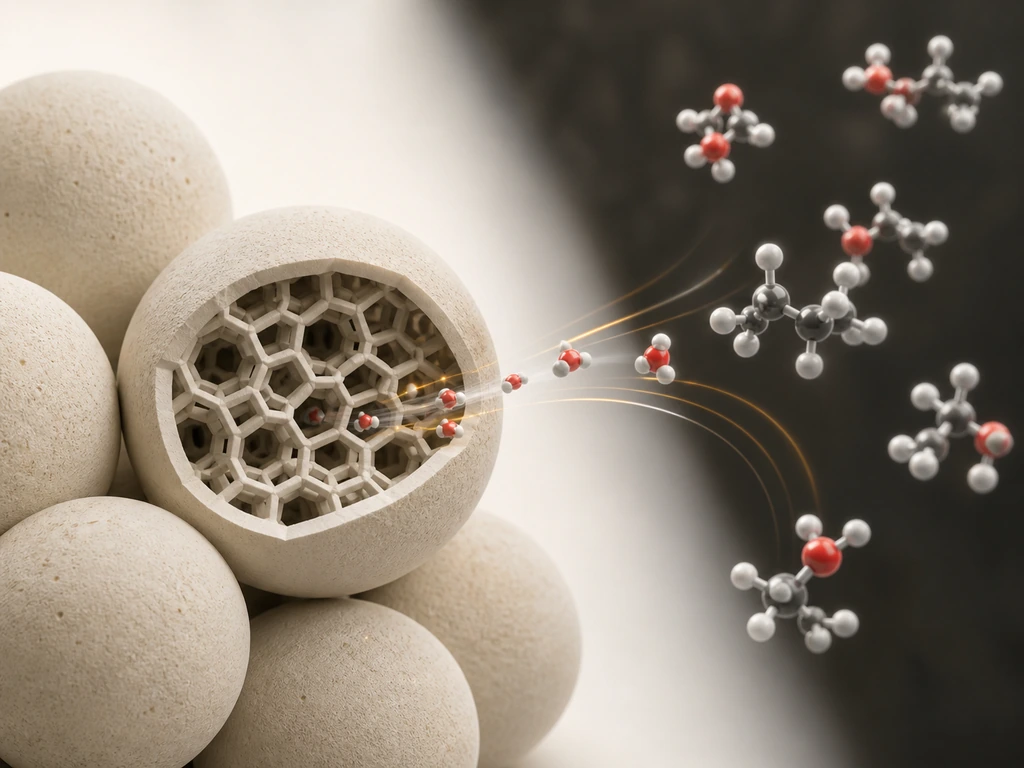
Imagine a kitchen sieve. Shake flour through it, and fine particles pass while clumps stay behind. Now shrink that idea down to the molecular level — the “holes” are measured in angstroms (Å), where 1 Å equals one ten-billionth of a meter. That is, in essence, what a molecular sieve adsorbent does: it lets molecules smaller than its pore size pass through and captures everything larger.
Molecular sieve adsorbents are synthetic crystalline aluminosilicates, better known as zeolites, with a precisely uniform pore structure. When manufactured, water molecules occupy the internal cavities. Once heated, this water is driven off, leaving behind a large internal surface area typically in the range of 500–800 m² per gram for industrial grades (ScienceDirect, 2024). To put that in perspective, a single gram of molecular sieve has roughly the internal surface area of two basketball courts.
The mechanism is adsorption (not absorption). Molecules stick to the internal pore walls via electrostatic attraction, aided by cations — typically sodium, potassium, or calcium — positioned within the crystal framework. Because every pore is the same size, the sieve discriminates by molecular dimension alone. A water molecule (kinetic diameter ~2.65 Å) slips through a 3 Å pore without resistance. An ethanol molecule (~4.3 Å) does not.
Three numbers anchor the fundamental value proposition: pore sizes ranging from 3 to 10 Å, water adsorption capacity of 20–25% of the material’s own weight for Type A sieves and up to 30% for 13X, and the ability to reduce moisture to single-digit ppm levels in gas and liquid streams. No other commercial desiccant combines all three.
Key distinction: Adsorption (surface adherence) ≠ absorption (bulk penetration). Molecular sieves do the former — which is why they can be regenerated and reused hundreds to thousands of times.
Types of Molecular Sieve Adsorbents: A Complete Breakdown
Before diving into individual types, one principle to keep in your pocket: evaluating any molecular sieve comes down to three dimensions — pore size (what fits in), cation type (what gets preferentially grabbed), and crystal structure (how much capacity and how fast). Every type that follows can be understood through this lens.
Type A Molecular Sieves: 3A, 4A, and 5A
The A-type family shares the same LTA (Linde Type A) crystal framework. What differentiates 3A, 4A, and 5A is the cation at the pore mouth, which changes the effective pore size.
Molecular Sieve 3A uses potassium ions to reduce the opening to ~3 Å. It readily adsorbs water and excludes ethanol, making it the standard adsorbent for fuel-grade ethanol dehydration, refrigerant drying, and insulated glass. Typical regeneration is 200–250°C in dry air or nitrogen.
Molecular Sieve 4A is the sodium form with a ~4 Å opening. It also adsorbs CO₂, H₂S, methanol, and ethanol, making it a general-purpose choice for gas and solvent drying. Typical regeneration is 200–300°C.
Molecular Sieve 5A uses calcium ions to create a ~5 Å opening. It separates normal paraffins from branched isomers and is widely used for PSA hydrogen purification, removing CO, CH₄, and CO₂ from reformer off-gas.
Type X Molecular Sieves: 13X and Its Variants
Switch from the LTA framework to FAU (faujasite), and you get the X-type family — most importantly 13X, often described by its nominal ~10 Å pore size. Its effective 12-membered-ring pore opening is approximately 7.4 Å. If Type A sieves are fine-mesh filters, 13X is the wide-mesh version that handles larger molecules.
13X (sodium form, FAU structure) adsorbs water, CO₂, H₂S, mercaptans, aromatics, and longer-chain hydrocarbons. Its signature application is air separation: 13X preferentially adsorbs nitrogen over oxygen, enabling PSA and VPSA oxygen generators to produce 90–93% purity O₂ from ambient air. This equilibrium selectivity is driven by nitrogen’s quadrupole interaction with framework cations, not size exclusion — both N₂ and O₂ fit easily through the ~7.4 Å pore opening. It also serves as the dehydration and desulfurization layer in natural gas processing ahead of cryogenic liquefaction, where any residual water or CO₂ would freeze and block the cryogenic heat exchangers.
The real performance leap comes with cation engineering. CaX and CaLSX (calcium-exchanged variants) boost nitrogen adsorption capacity by 30–50% over standard 13X in VPSA oxygen service. LiLSX (lithium-exchanged low-silica X) raises the bar further; it is the highest-performing adsorbent for medical and portable oxygen concentrators, capable of delivering 93%±3% O₂ purity in industrial VPSA systems and exceeding 95% in compact medical devices. The trade-off: LiLSX costs 5–10 times more per kilogram than standard 13X. But because it achieves the same oxygen output with a smaller adsorbent bed and lower compressor power, the total system economics often favor lithium.
Specialty Molecular Sieves: Beyond the Standard Grades
The molecular sieve universe extends well beyond 3A through 13X. Four specialty categories deserve attention:
Carbon Molecular Sieves (CMS) are not zeolites at all; they are carbonized organic polymers with tunable pore sizes. Their killer application is PSA nitrogen generation: CMS preferentially adsorbs oxygen from compressed air, letting nitrogen pass through at 95–99.999% purity. If your operation needs on-site N₂, CMS is almost certainly what is inside the generator.
Silver-exchanged zeolites (Ag⁺ form) target a niche but critical problem: hydrogen accumulation in the vacuum annulus of cryogenic storage tanks (LNG, liquid hydrogen). Even trace hydrogen degrades the insulating vacuum over time. Silver zeolite chemisorbs H₂ at cryogenic temperatures, preserving vacuum integrity for years.
ZSM-5 (MFI framework) is the crossover athlete — a molecular sieve that doubles as a shape-selective catalyst. With a 10-membered ring pore system (~5.5 Å) and silicon-to-aluminum ratios tunable from ~20 to infinity, ZSM-5 is used in catalytic dewaxing, methanol-to-gasoline processes, and selective adsorption where both size exclusion and acidic-site chemistry matter.
Binder-free molecular sieves eliminate the inert clay binder (typically 15–25% of a standard bead or pellet). Without the dead weight, effective adsorption capacity per kilogram increases by 15–25%, and the risk of binder-induced side reactions in catalytic applications disappears entirely.
Molecular Sieve Type Comparison at a Glance
| Type | Pore Size (Å) | Cation Form | Key Targets | Top Applications | Regen Temp |
|---|---|---|---|---|---|
| 3A | ~3 | K⁺ | Water, NH₃ | Ethanol dehydration, refrigerant drying, insulated glass | 200–250°C |
| 4A | ~4 | Na⁺ | Water, CO₂, H₂S, methanol | Natural gas drying, solvent drying, air prepurification | 200–300°C |
| 5A | ~5 | Ca²⁺ | n-Paraffins, CO, CO₂, H₂S | PSA H₂ purification, n/iso-paraffin separation | 250–300°C |
| 13X | ~10 nominal (7.4 Å opening) | Na⁺ | Water, CO₂, H₂S, aromatics | Air separation (O₂), natural gas pre-treatment, CO₂ capture | 260–320°C |
| CaX/LiLSX | ~10 nominal (7.4 Å opening) | Ca²⁺/Li⁺ | N₂ (enhanced) | VPSA/PSA O₂ generation (industrial + medical) | 260–320°C |
| CMS | Tunable | — | O₂, CO₂ | PSA N₂ generation | Variable |
Quick selection shortcut: Need dehydration only? Start with 3A. Dehydration plus CO₂ removal? 4A or 13X. VPSA/PSA oxygen? LiLSX is the current industrial standard; 13X or CaX may still be found in legacy systems. PSA nitrogen? Carbon molecular sieve.
How to Select the Right Molecular Sieve: A Four-Step Decision Framework
Here is where most online content stops short: a handful of bullet points under “choosing the right sieve.” This section gives you a structured, repeatable method grounded in molecular physics and process engineering. Four steps. No black boxes.
Step 1 & 2 — Define Your Target Molecule, Then Match the Pore Size
Every molecular sieve selection starts with one question: what exactly are you trying to remove?
The answer determines pore size. Below are the kinetic diameters of the molecules most commonly encountered in industrial drying and separation. Values are based on the commonly used Breck (1974) dataset; figures can differ between reference datasets and measurement conventions.
| Molecule | Kinetic Diameter (Å) | Typical Source Stream |
|---|---|---|
| Water (H₂O) | 2.65 | Natural gas, air, solvents, refrigerants |
| Ammonia (NH₃) | 2.6 | Syngas, reformer off-gas |
| Hydrogen Sulfide (H₂S) | 3.6 | Sour natural gas, biogas |
| Carbon Dioxide (CO₂) | 3.3 | Natural gas, flue gas, biogas |
| Oxygen (O₂) | 3.46 | Air |
| Nitrogen (N₂) | 3.64 | Air |
| Methanol | 3.8 | Chemical process streams |
| Ethanol | 4.3 | Bioethanol, solvent recovery |
| Benzene | 5.85 | Petrochemical streams, aromatics recovery |
The matching rule is simple: your target molecule’s diameter must be smaller than the molecular sieve’s pore opening. But the selection strategy is slightly more nuanced: pick the smallest pore that still captures your target. Why? Because smaller pores exclude more co-adsorbates. If your goal is strictly water removal from ethanol, 3A is the correct choice: water enters, ethanol stays out. Choosing 4A would co-adsorb ethanol and throw away your product. A few practical mappings:
- Dehydration only (no co-adsorption risk tolerated): 3A
- Dehydration + CO₂ removal from natural gas: 4A or 13X (13X preferred if heavier hydrocarbons or mercaptans are present)
- N₂/O₂ separation by PSA: LiLSX (medical/high-purity) or 13X/CaX (industrial)
- O₂/N₂ separation for nitrogen generation: Carbon molecular sieve
- Sulfur species + water from sour gas: 5A or 13X
A caution worth registering: effective pore size is not purely geometric. The cation at the pore mouth generates an electrostatic field that slightly alters adsorption behavior for polar molecules. 3A (K⁺ form, pore ~3 Å) readily adsorbs water and can adsorb ammonia, though its stronger interaction with ammonia’s dipole can slow adsorption kinetics. If your application sits near the boundary, request breakthrough curve data from your supplier.
Step 3 — Verify Operating Conditions: Temperature, Pressure, and Contaminants
Pore-size matching is necessary but not sufficient. The second most common failure mode in molecular sieve selection is ignoring the operating environment. Three variables demand attention:
Temperature. Adsorption capacity declines as temperature rises; this is fundamental thermodynamics. A sieve that holds 20 wt% water at 25°C may hold only 5–8 wt% at 120°C. If your process stream enters the bed hot, you need to derate accordingly. Different cation forms also have different thermal stability ceilings: LiLSX is typically stable to about 500–600°C in dry conditions, while NaX can undergo hydrothermal aging at much lower temperatures in the presence of steam. Match the cation to your regeneration temperature — not just your adsorption temperature.
Pressure. In PSA and VPSA systems, the adsorbent experiences cyclic pressure swings from near-vacuum to 5–10 bar, thousands of times per year. PSA service demands high crush strength; typical industrial specifications range from about 30 N/bead for small mesh to 80 N/bead for larger beads. Below the appropriate specification, bead breakage generates dust that clogs downstream filters and increases bed pressure drop. Always request batch crush-strength data as part of the certificate of analysis (CoA).
Contaminants. This is the one that catches engineers off guard. Liquid water, amine carryover from upstream gas sweetening, glycol from dehydration units, and compressor oil mist are all molecular sieve poisons: they coat the external surface, block pore mouths, or cause hydrothermal degradation at regeneration temperatures. The fix is a guard bed of activated alumina placed immediately upstream of the molecular sieve bed, with a minimum depth of 0.3 meters (1 foot). Activated alumina acts as a sacrificial layer: it absorbs liquid water and heavy contaminants, protecting the more expensive molecular sieve downstream.
Ask yourself three questions before locking in a specification:
- What is the highest temperature the bed will see during regeneration?
- What is the lowest and highest operating pressure?
- Is there anything in the feed stream besides my target molecule that could foul the sieve?
Match cation to regeneration temperature, not just adsorption temperature. LiLSX is typically stable to 500–600°C in dry conditions.
Specify crush strength in N/bead for the selected bead size. Request a batch CoA with every shipment.
Guard bed: ≥ 0.3m activated alumina upstream. Protects molecular sieve from liquid water, amines, glycol, and oil mist.
Step 4 — Choose the Right Form Factor and Particle Size
The final step is often the most overlooked. Molecular sieves come in three physical forms, and the choice directly impacts pressure drop, mass transfer rate, and bed integrity:
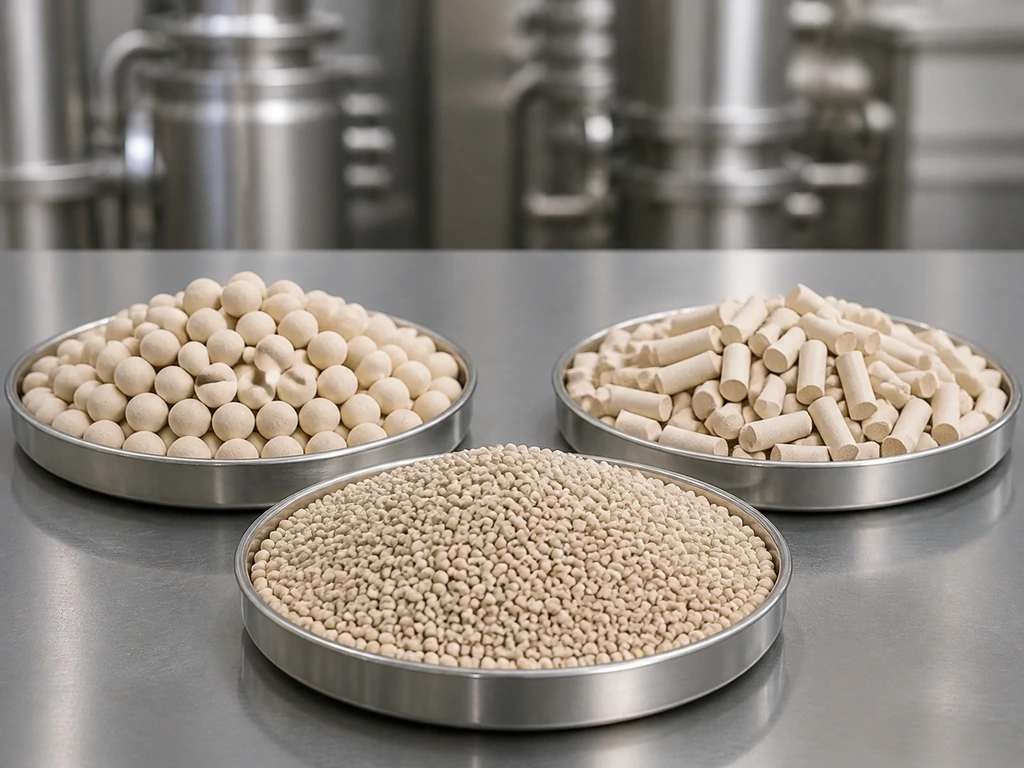
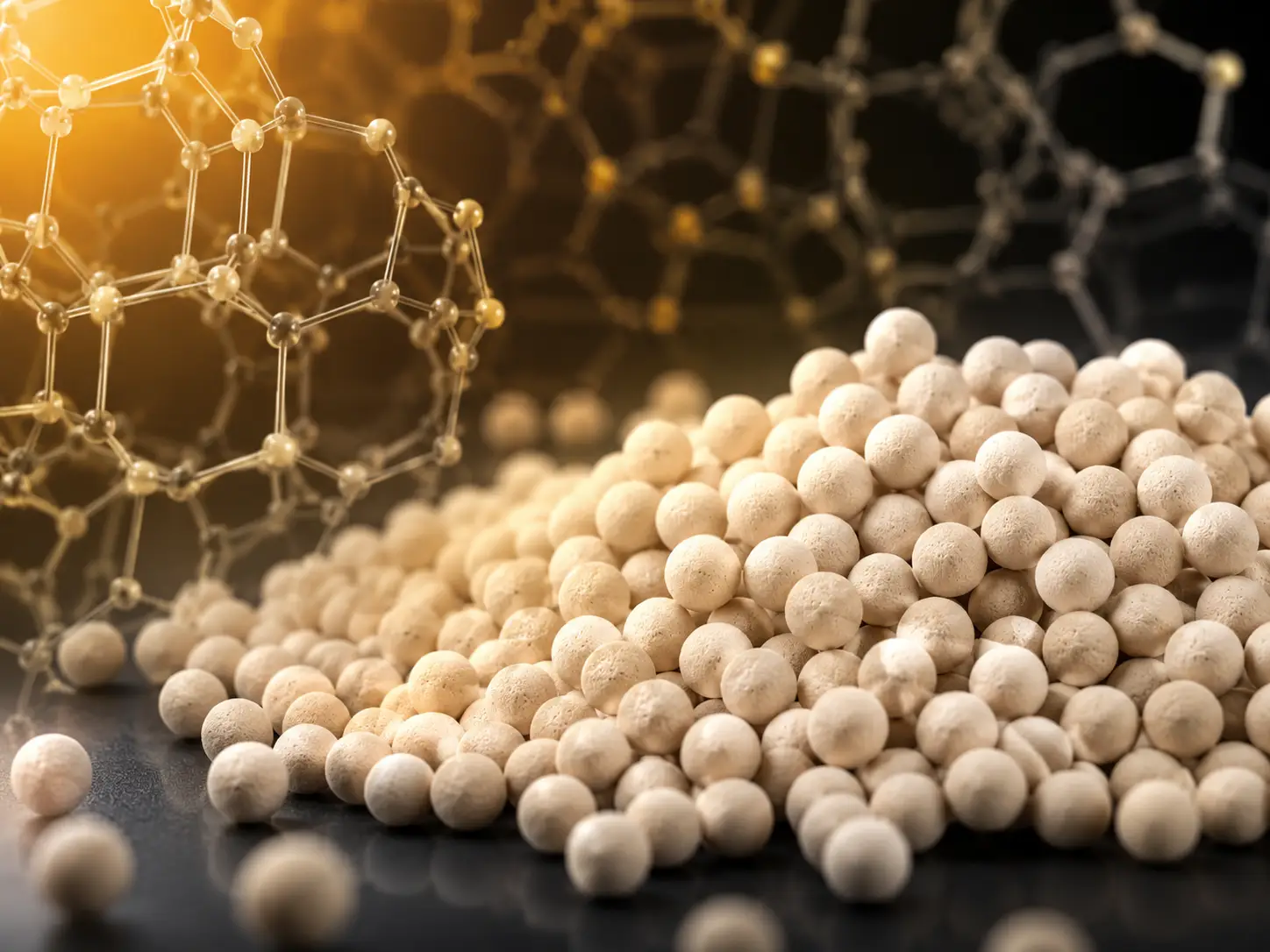
- Beads (spherical, 1.6–5 mm): The default choice for most gas-phase applications. Spherical geometry packs uniformly, minimizes channeling, and produces the lowest pressure drop for a given particle size. The standard specification for gas drying is 4×8 mesh (4.75–2.36 mm).
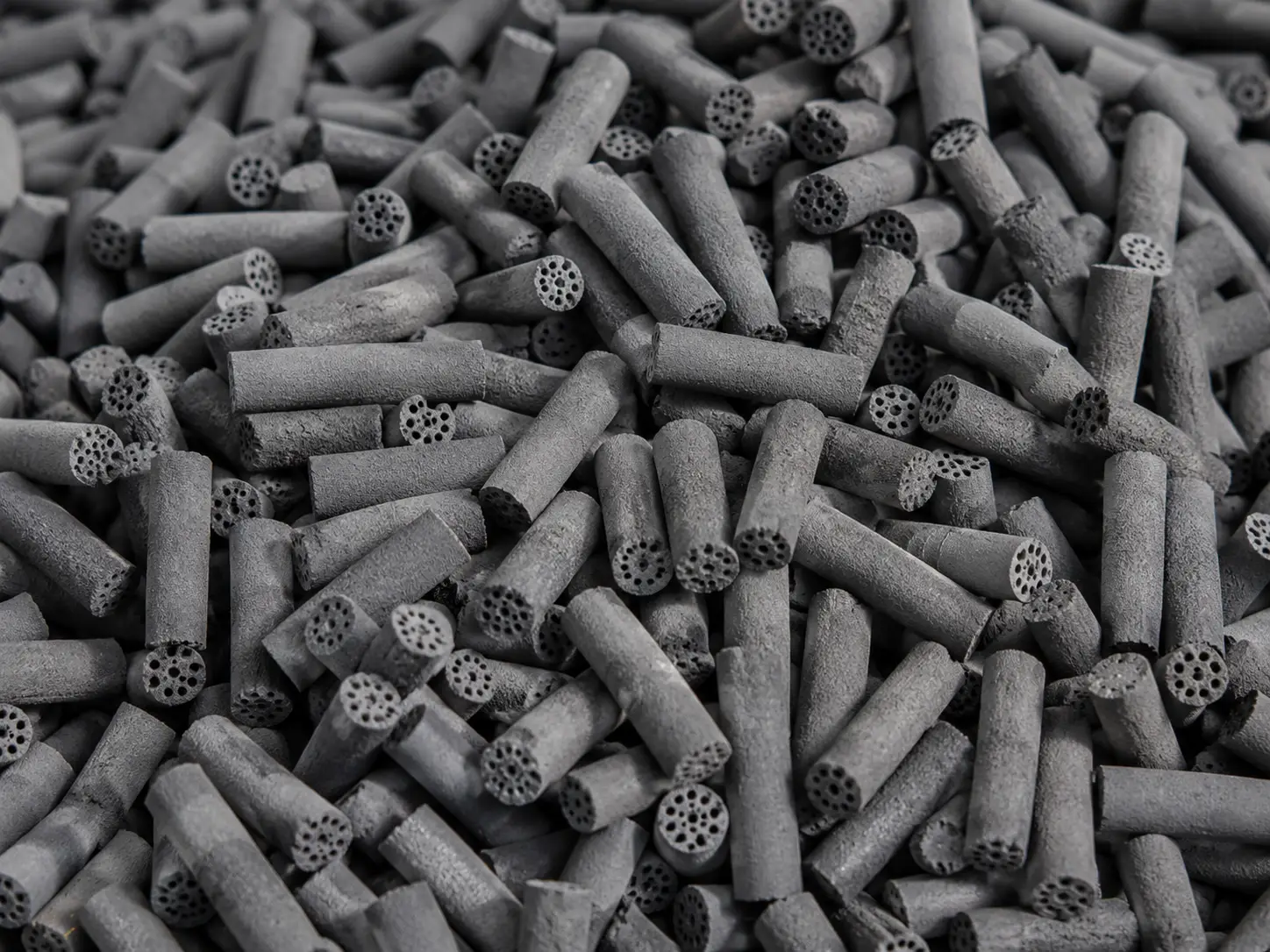
- Pellets (cylindrical extrudates, 1/16″–1/8″ diameter): Higher crush strength than beads due to the extrusion process, making them preferable for high-pressure service or applications with frequent pressure cycling. The trade-off: pellets generate roughly 30–40% higher pressure drop than beads of equivalent diameter.
- Powder (<100 µm): Not for packed beds. Activated molecular sieve powder is dispersed into liquid systems — polyurethane coatings, adhesives, sealants — as a moisture scavenger. Typical loading: 3–5 wt% of the formulation. Dispersion quality is the performance-limiting variable; poorly dispersed powder creates localized moisture pockets.
The selection logic: gas-phase in a fixed bed → beads (4×8 mesh) unless pressure cycling is severe → pellets. Liquid-phase → 8×12 mesh (2.36–1.70 mm) to balance mass transfer and pressure drop. Moisture scavenging in a formulated product → activated powder.
When you combine all four steps, you arrive at a specification, not a guess. For example: “13X beads, 4×8 mesh, batch-certified crush strength in N/bead, with an activated alumina guard bed of 0.3 m minimum depth, regenerated at 280°C in counter-current dry nitrogen.” That is an engineer’s spec, not a product brochure headline. And it is what separates a bed that runs for five years without issue from one that needs re-screening after six months.
Not every manufacturer can hit the pore size, crush strength, and batch consistency your process demands.
Molecular Sieve vs. Silica Gel and Activated Alumina: When to Use Which
Knowing what molecular sieves can do is one thing. Knowing when not to use them is equally important, because in some scenarios a cheaper alternative does the job just as well.
The three major commercial desiccants occupy different niches on the performance-cost curve:
| Property | Molecular Sieve | Silica Gel | Activated Alumina |
|---|---|---|---|
| Water capacity at 20% RH | ~21 wt% | ~5–8 wt% | ~10–15 wt% |
| Water capacity at 80% RH | ~22 wt% (flat above 40%) | ~35–40 wt% | ~20–25 wt% |
| Dew point achievable | -100°F (-73°C) or lower | -40°F (-40°C) | -60°F (-51°C) |
| Thermal stability | 150°C+ retains capacity | Significant loss above ~50°C | Stable to ~120°C |
| Selectivity | Molecular-level size + polarity | None | Minimal |
| Regeneration temp | 200–320°C | 120–150°C | 180–250°C |
| Cost per kg | $2–10 (standard types) | $1–5 | $3–10 |
| Best for | Deep dehydration, selective separation, high-temperature | General packaging, high-humidity | Liquid water protection, guard bed |
The decision rule is less about “which is best” and more about “which matches the operating window”:
- High relative humidity (>50% RH) and moderate dryness requirement: silica gel or activated alumina wins on cost.
- Low relative humidity (<40% RH) or deep dew point requirement (<-40°F): molecular sieve is the only option that works.
- Liquid water present in the feed: activated alumina as a guard bed — it can hold up to roughly 40–50% of its weight in liquid water without disintegrating.
- Both liquid water protection AND deep drying needed: activated alumina guard bed + molecular sieve main bed, in series. This is the standard configuration in every well-designed natural gas dehydration unit.
If your process stream is warm (>50°C), silica gel and activated alumina start losing capacity rapidly, while molecular sieves barely notice until well past 150°C. That alone often settles the decision in high-temperature drying applications.
Molecular Sieve Pricing: What to Expect and What Drives the Cost
“How much does a molecular sieve cost?” is the question Google’s “People Also Ask” box surfaces for this keyword — and one that almost no top-ranking page answers. Here is an honest answer.
Price bands for standard molecular sieve types, based on 2025–2026 market data for industrial-volume purchases (these are reference ranges, not real-time quotes):
| Type | Approximate Price (USD/kg) | Notes |
|---|---|---|
| 3A, 4A, 5A | $2–5 | Commodity grades, competitive across Chinese and Indian manufacturers |
| 13X (standard) | $3–8 | Slight premium for larger pore FAU synthesis |
| LiLSX | $15–40 | Lithium carbonate raw material cost + smaller production scale |
| Carbon Molecular Sieve (CMS) | $5–20 | Wide range depending on nitrogen purity spec and pore-size precision |
| Activated Zeolite Powder | $3–8 | Finer particle size adds milling cost |
Five variables drive where a given order falls within these ranges:
- Cation type: Lithium is the cost multiplier. LiLSX requires lithium carbonate — a raw material whose price is set by the battery industry, not the adsorbent industry. This is why LiLSX costs 5–10× more than NaX.
- Purity and specifications: Tighter particle size distribution, lower dust content, and certified crush strength all add QC cost. A general-purpose 4A bead is $2/kg; the same 4A with a certified crush-strength distribution and a 3-year sample retention guarantee is closer to $5/kg.
- Form factor: Powder is typically 20–40% cheaper than formed beads or pellets of the same chemical type, because forming (extrusion or granulation + calcination) adds two energy-intensive steps.
- Order volume: Bulk orders of 20 tonnes or more typically earn a 10–30% discount. The reverse is also true — a 500 kg R&D order pays a premium.
- Logistics and packaging: For international buyers, the ex-works (EXW) price per kilogram is only part of the story. Ocean freight for a 20-foot container from Asia to Europe or North America runs $2,000–4,000. Destination port duties, customs brokerage, and last-mile trucking add another 10–20%. Packaging matters too; sealed steel drums cost more than 25 kg bags but are mandatory for ocean shipments to prevent moisture pickup in transit.
One economic insight worth internalizing: LiLSX is expensive per kilogram, but the metric that matters is cost per ton of O₂ produced over the bed’s service life. Because LiLSX achieves higher oxygen productivity per kilogram of adsorbent (faster kinetics + higher N₂ capacity), it enables a smaller bed volume and lower compressor power. In a 100-ton VPSA oxygen plant, the higher upfront cost often pays back within 18–24 months through electricity savings alone. Do not evaluate molecular sieve pricing as a purchase order line item; evaluate it as a process cost.
Regeneration, Quality Standards, and Sourcing Best Practices
A molecular sieve is not a consumable. A well-maintained bed regenerated under proper conditions will last 3–5 years — sometimes longer. But regeneration done poorly shortens that lifespan to months. And buying from the wrong supplier can mean the bed underperforms from day one. This final section covers both sides: keeping your sieve alive, and making sure you bought the right one in the first place.
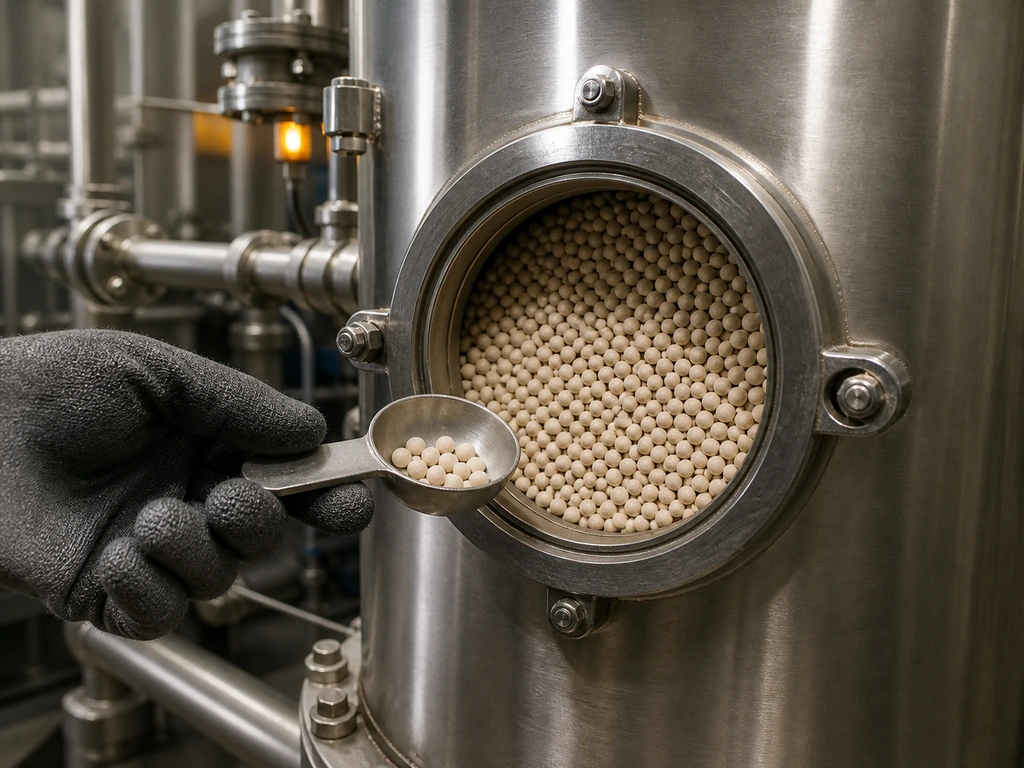
How to Regenerate Molecular Sieves: Methods, Temperatures, and Lifecycle
Regeneration is desorption driven by heat or pressure: stripping the captured molecules off the internal surface so the sieve can adsorb again.
Thermal Swing Adsorption (TSA) is the workhorse method. Hot regeneration gas (typically dry nitrogen, clean air, or a slipstream of the product gas) is passed through the bed counter-current to the adsorption flow direction. Counter-current flow ensures the bed outlet — the end that must produce the lowest dew point — contacts the driest, hottest gas last. Regeneration temperature is determined by sieve type and adsorbed species, rather than by a fixed increment above the adsorption operating temperature. Typical targets are:
| Sieve Type | Regeneration Temperature |
|---|---|
| 3A | 200–250°C (392–482°F) |
| 4A, 5A | 250–300°C (482–572°F) |
| 13X, CaX, LiLSX | 260–320°C (500–608°F) |
Pressure Swing Adsorption (PSA) regenerates by reducing pressure to near-vacuum (~0.1 bar absolute) rather than by heating. The energy cost is lower, but the capital cost of the vacuum pump and the more complex valving is higher. PSA is the standard in oxygen and hydrogen purification systems.
How do you know when to regenerate? The operational signal is rising moisture or impurity levels at the bed outlet (dew point trending upward). A 20% decline in effective adsorption capacity is the typical trigger. How do you know when to replace? Three indicators: (1) post-regeneration capacity falls below 60% of the original specification, (2) excessive dusting or bead disintegration causing unacceptable pressure drop, or (3) increasing regeneration energy consumption without corresponding performance recovery.
One thing to avoid: over-regeneration. Running regeneration gas too hot or for too long accelerates hydrothermal aging — the gradual collapse of the zeolite crystal structure from repeated exposure to steam at high temperature. The damage is cumulative and irreversible. Regenerate to specification, not to the highest temperature your heater can reach.
Quality Certifications and Sourcing Checklist for Molecular Sieve Buyers
Sourcing molecular sieves is not like buying commodity chemicals. The difference between a bed that delivers five years of stable dew point and one that needs re-screening within 18 months often traces back to supplier quality systems that the buyer never verified.
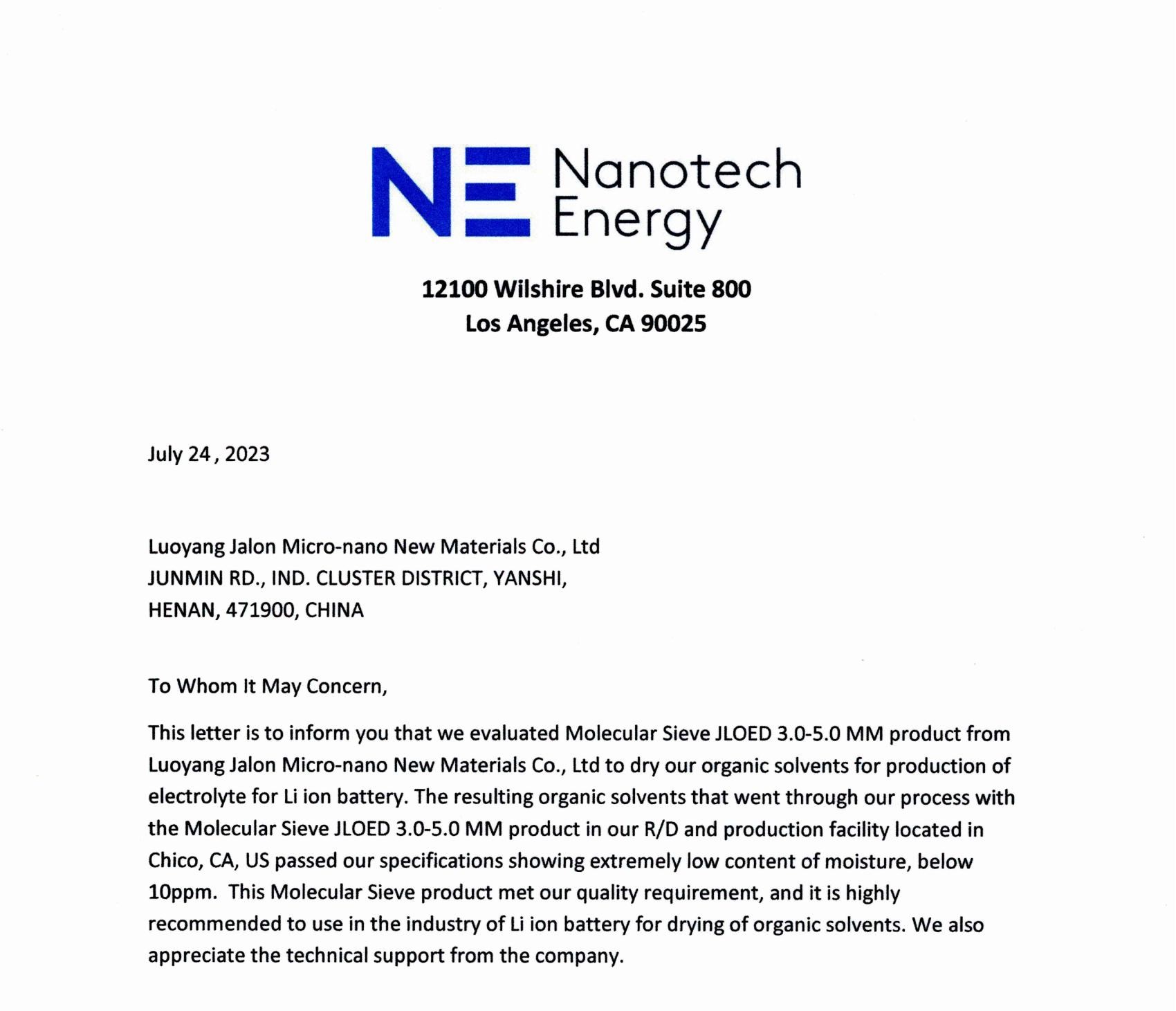
A good supplier relationship reveals itself not in the quotation but in the technical conversation before it — the questions the supplier’s engineer asks about your feed composition, your operating envelope, and your performance targets. A supplier that quotes a price without asking any of those questions does not understand your process well enough to serve it.
References
- ScienceDirect. “Molecular Sieve — an overview.” 2024.
- Sorbchem India. “Molecular Sieve Adsorbents — What They Are & How They Work.” 2023.
- Zeochem. “Molecular Sieves.”
- AGM Container Controls. “All About Molecular Sieve Desiccants.” 2023.
- HengYe Inc. “Zeolite Molecular Sieve: Guide to Adsorption and Catalysis.” 2024.
- Delta Adsorbents. “Molecular Sieves Explained: 3A, 4A & 5A.” 2021.
- Kingdotech. “Molecular Sieve Cost Analysis.” 2024.
- Desiccant Global. “Top 21 Molecular Sieve Manufacturers in 2026.” 2026.
- Jalon Zeolite. “About Us.”
- Jalon Zeolite. “Contact.”
- Jalon Zeolite. Homepage.
 EN
EN  DE
DE  ES
ES  JA
JA  RU
RU  PT
PT  FR
FR