
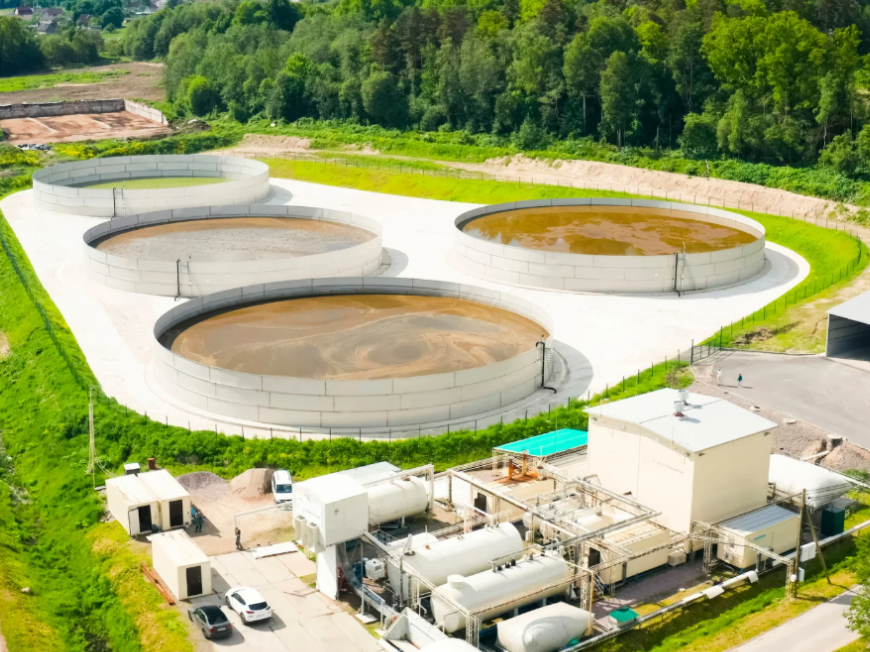
Raw biogas typically contains a significant amount of carbon dioxide and impurities that limit its direct utilization. Purification increases methane concentration and improves overall energy value, allowing the gas to be used as pipeline-quality biomethane, vehicle fuel, or industrial energy.
As demand for renewable natural gas continues to grow, adsorption-based separation has become a widely adopted upgrading method. Advances in molecular sieve materials have improved separation efficiency and operational reliability, making large-scale biogas upgrading more practical and economically feasible.
Biogas purification systems commonly use pressure swing adsorption (PSA) or vacuum pressure swing adsorption (VPSA) processes to separate carbon dioxide from methane under cyclic pressure conditions.
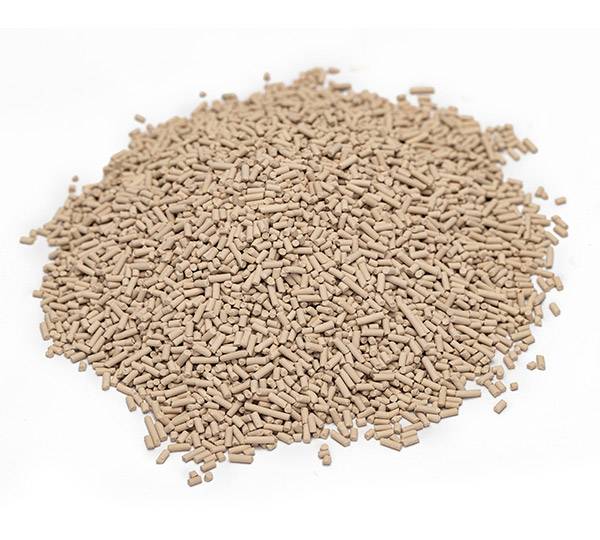
Within the adsorption unit, molecular sieves selectively capture CO₂ molecules while methane flows through the bed as product gas. The separation performance largely depends on the pore structure and adsorption characteristics of the adsorbent, making molecular sieve selection a key factor in system efficiency and stability.
Optimized molecular sieve properties directly support stable system operation and efficient gas upgrading.
High CO₂ selectivity combined with strong adsorption capacity helps reduce energy demand during compression and regeneration stages while maintaining effective separation performance.
A controlled pore structure helps balance methane purity and recovery, enabling upgrading systems to maximize biomethane output.
High mechanical strength and stable adsorption performance allow repeated pressure cycling with consistent results, supporting long-term operation of PSA and VPSA units.
Multiple particle sizes and product grades allow flexible selection to match different equipment designs and operating conditions.


 EN
EN  DE
DE  ES
ES  JA
JA  RU
RU  PT
PT  FR
FR