Water in a compressed air line can corrode piping, freeze in exposed valves, or disrupt a paint finish. A compressor takes in ambient air containing water vapor. Compression increases the vapor’s partial pressure, and as the discharged air cools below its pressure dew point, some of that vapor condenses. An aftercooler, separator, and drain remove bulk liquid upstream. The desiccant dryer removes the vapor that remains, reducing the risk of condensation farther downstream.
This article covers adsorption dryers for compressed air systems: the twin-tower units you see next to compressors in plants, and the small single-cartridge canisters on garage and workshop setups. It does not cover the hopper dryers that plastic processors use to dry resin pellets, or the rotary desiccant wheels used in building HVAC. Same word, different machines.
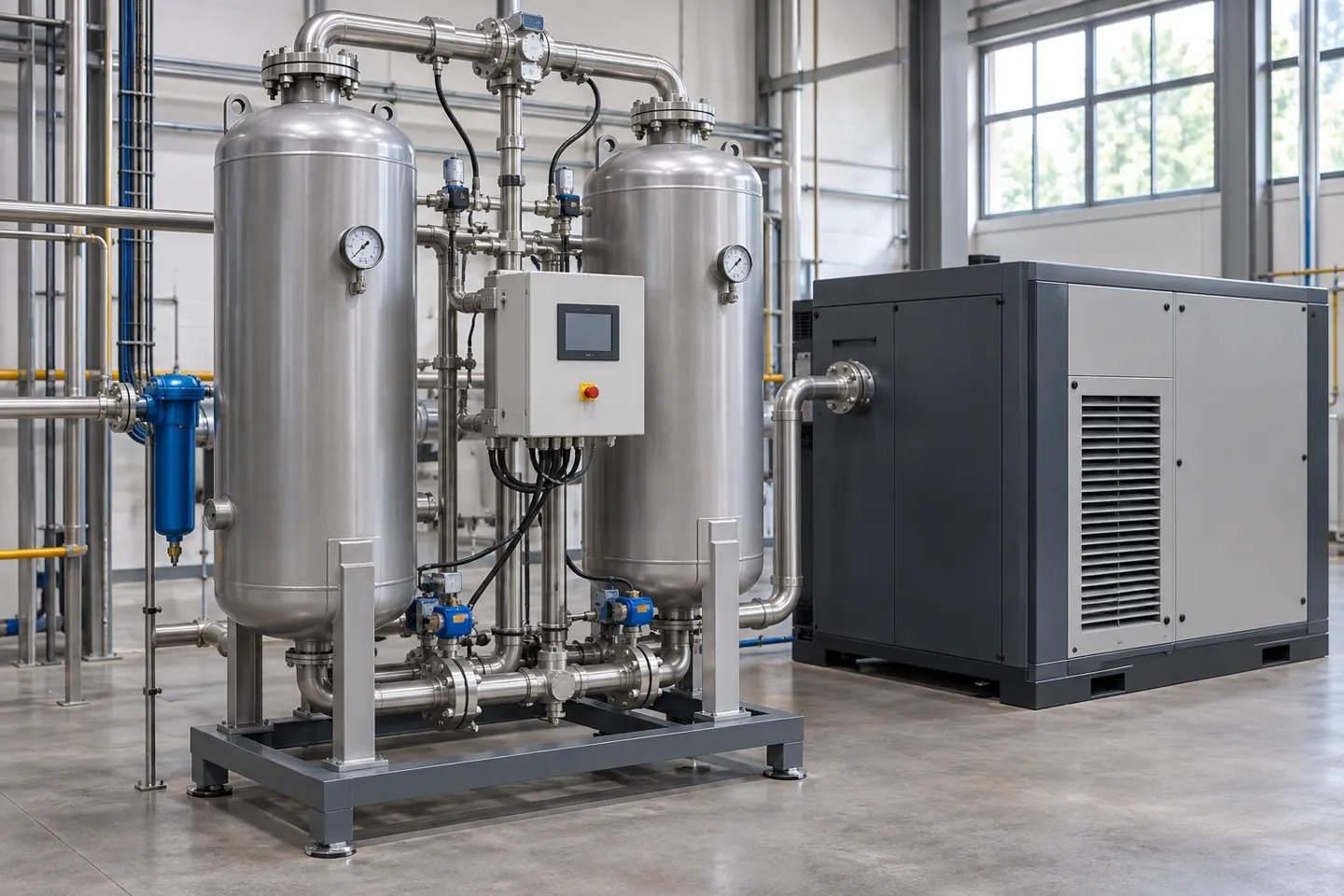
The desiccant air dryer working principle comes down to adsorption. Compressed air passes through a packed bed, and water molecules accumulate on the internal surfaces of the porous material. A regenerative dryer restores part of the bed’s capacity by lowering the water-vapor partial pressure, heating the bed, or combining those methods. The regeneration stream then carries away the released moisture.
Adsorption and absorption
الامتصاص
Water accumulates on the internal surfaces of a porous solid. A suitable dry purge stream, with heat where required, releases and carries away the adsorbed water.
الامتصاص
Water enters the bulk of another material. A deliquescent drying salt, for example, takes up water and forms a liquid solution.
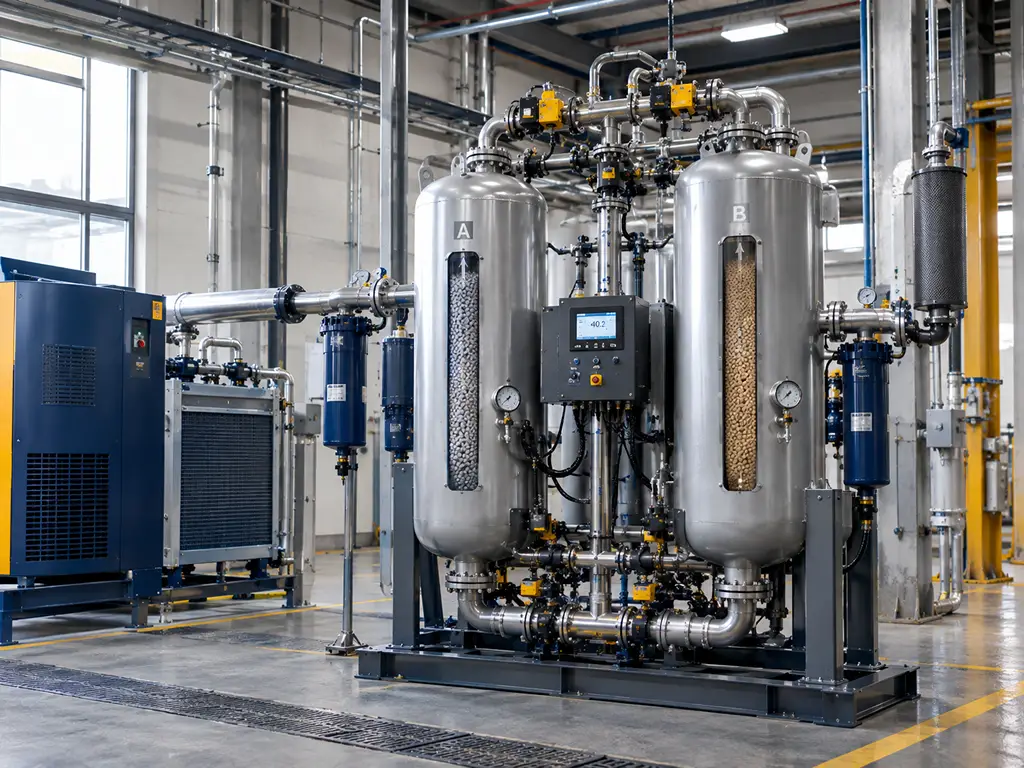
Most industrial regenerative dryers use two towers. While Tower A dries the process air, Tower B is isolated and regenerated. A conventional heatless dryer depressurizes the offline tower and sends dry purge air through it. Heated designs may include a separate cooling stage. The regenerated tower returns to near line pressure before switching to limit disturbance to the downstream air supply. The controller can switch on a timer or, where supported, use a dew point signal to adjust the drying interval.
Smaller setups often use a single canister of indicating silica gel. A color change gives a visual indication of moisture uptake. When the cartridge reaches its service limit, replace it or reactivate it according to the supplier’s instructions. For intermittent workshop tools or a point-of-use paint line, a cartridge can be practical when flow and outlet quality are within its rating.
The twin-tower cycle, four moves
Tower A adsorbs moisture while Tower B depressurizes
Tower B releases moisture into the regeneration stream
Tower B re-pressurizes to line pressure
Valves switch roles, Tower A regenerates while Tower B dries
That is the machine. The cycle tells you how the towers take turns, but it tells you nothing about what the towers are filled with. The fill is where the real differences live, and it decides how dry your air can actually get.
What Is Actually in the Beds: The Three Drying Materials
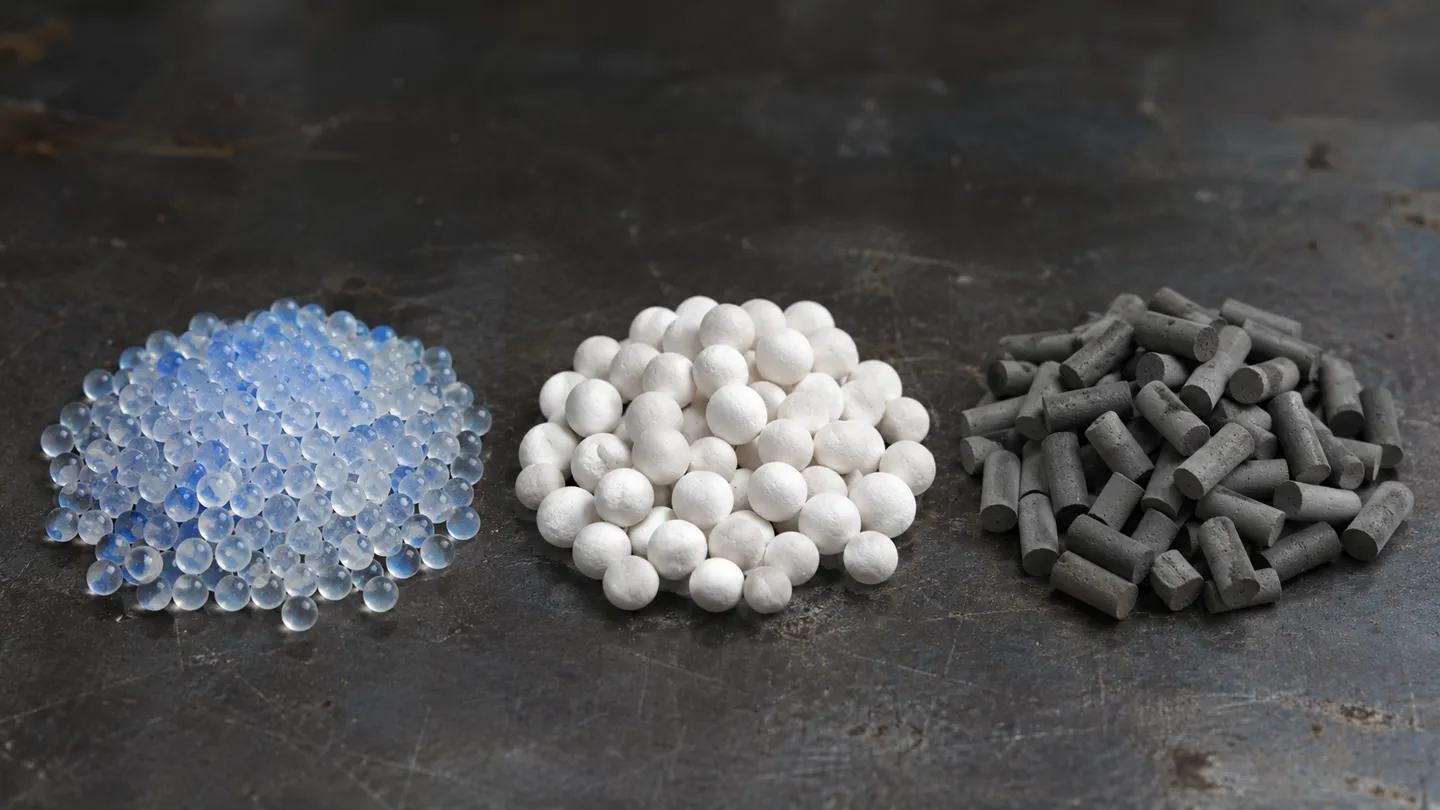
Open a twin-tower dryer and you will find one of three families of material, or a deliberate combination of them. The choice is not cosmetic. It sets the floor under your dew point, decides how the bed reacts to oil and liquid water, and determines what you will pay for on replacement day.
Silica gel: moisture uptake and indicating grades
Silica gel is often sold as translucent beads. Some grades contain a moisture indicator, and the color change depends on the formulation. Silica gel can hold substantial moisture at higher relative humidity and is used in some point-of-use and regenerative dryers. In the low water-vapor conditions near the outlet of a deep-drying bed, molecular sieves can retain more water than conventional silica gel. Check the grade’s water-uptake data and its resistance to attrition under the intended operating conditions.
Activated alumina: a common fill for −40 °C PDP designs
Activated alumina is a common fill in industrial twin-tower beds. It can handle much of the incoming water-vapor load in suitably rated dryers, including many systems designed for a −40 °C pressure dew point. Formed alumina grades are available in several bead sizes. Compare crush strength at the same size and test method, and use the declared temperature and relative humidity when comparing static water uptake. The dryer still needs upstream separation and drainage to protect the bed from bulk liquid.
Molecular sieves: deep drying at low vapor pressure
The molecular sieves used in these dryers are typically synthetic zeolites, crystalline aluminosilicates with well-defined pore structures. Type 4A has a nominal opening of about 4 Å. The nominal designation of 13X describes a commercial grade, and pore access depends on the window connecting its larger cages. These materials can retain water at low vapor partial pressures, which makes them useful in some systems specified for −70 °C pressure dew point. The rated result depends on the bed, cycle, and inlet conditions. Type 13X can also adsorb carbon dioxide, but a static CO₂ capacity does not establish a dryer’s CO₂ removal performance under humid feed conditions. A replacement grade should be checked for regeneration compatibility and protected from oil carryover.
Layered beds: bulk vapor removal and final drying
A layered bed can use activated alumina at the process-air inlet to remove much of the water-vapor load, then a downstream molecular sieve layer for final drying. The physical position of each layer depends on the flow direction. A properly designed upstream separator and filtration train protects the fill from liquid water and oil aerosols. Select the layer sequence and quantity with the dryer manufacturer.
Inside a layered bed
Low-PDP dry air out
Molecular sieve layer, downstream
Removes traces of water vapor
Activated alumina layer, upstream
Removes much of the incoming water vapor
Wet compressed air in
Example of an upflow drying bed. Follow the specified loading order for your dryer.
Drying materials compared
| المواد | Deep drying role | Water uptake | Protection required | الخصائص الميكانيكية | Typical application |
|---|---|---|---|---|---|
| جل السيليكا | Depends on grade and cycle | Substantial at higher humidity | Protect from liquid and oil | Grade-specific | Point-of-use cartridges and regenerative dryers |
| الألومينا المنشطة | Common in −40 °C PDP designs | Handles bulk vapor load | Protect from liquid and oil | Specify strength and attrition by size | Industrial twin-tower beds |
| المنخل الجزيئي 4A | Can support deep drying in rated systems | Retains water at low vapor pressure | Protect from liquid and oil | Grade-specific | Deep-drying or polishing layers |
| المنخل الجزيئي 13X | Can support deep drying in rated systems | Adsorbs water and can also adsorb CO₂ | Protect from liquid and oil | Grade-specific | Specialty duties when grade is specified |
| Layered bed | Downstream layer polishes the air | Upstream layer handles bulk vapor | Requires upstream pretreatment | Depends on each layer | Dryers designed for staged moisture removal |
Check the performance of the complete dryer before choosing a material. Silica gel, alumina and molecular sieves each have grade-specific uptake characteristics. A −40 °C or −70 °C pressure dew point is a system rating that depends on the inlet air, media, bed design and regeneration cycle. Liquid water and oil carryover can impair any of these fills. When changing the media, confirm that the existing purge, heating and cooling stages suit the new grade.
Regeneration restores the working capacity the next drying cycle needs, and its energy cost shows up on the compressed air bill.
How the Beds Come Back: Regeneration and Its Real Cost
Water loading on the desiccant depends on water-vapor partial pressure and bed temperature. A dry purge lowers the vapor partial pressure around the adsorbent. Heating lowers the amount of water the bed retains at a given vapor pressure, while the regeneration stream carries the released moisture out. Four common approaches use these effects in different ways.
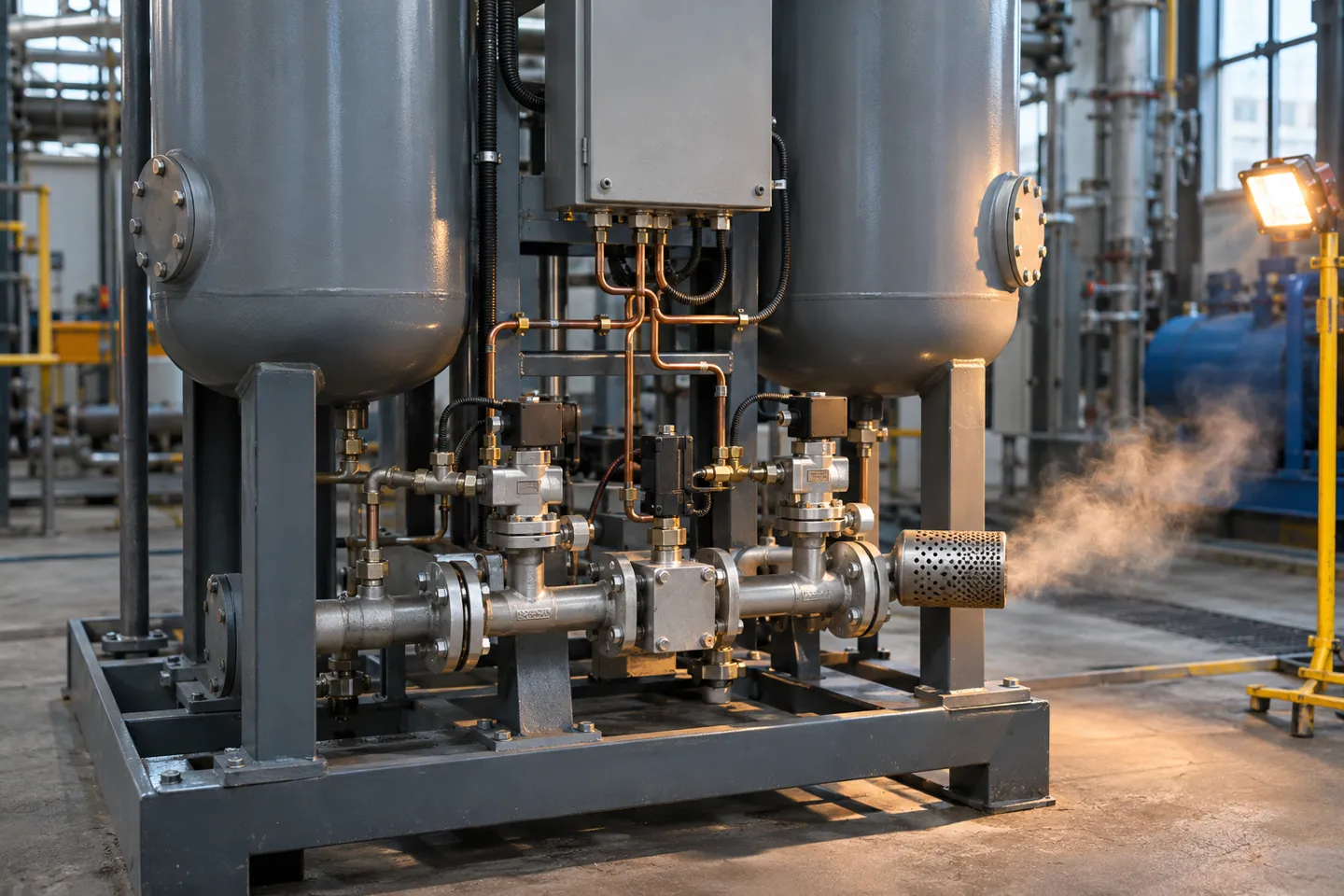
Heatless regeneration expands a portion of the dried product air and passes it through the idle bed, usually near atmospheric pressure. It requires no regeneration heater or blower. Natural Resources Canada gives 15–20% of rated dryer capacity as a typical purge demand for an uncontrolled heatless design. For example, a dryer rated for 1,000 scfm that uses 150 scfm for purge delivers about 850 scfm before other cycle losses. Check the rated and average purge flow for the unit and use the same reference conditions when comparing flow figures.
Internally or externally heated dryers warm the regeneration stream and can reduce demand for compressed purge air. A heated blower purge dryer typically uses ambient air for the heating stage. Some models use dry compressed air for cooling or repressurization, so compare consumption across the full cycle. Include heater and blower power, maintenance, and compressor power for any compressed air the dryer uses.
Heat-of-compression dryers use hot compressor discharge air to regenerate the bed. The design must be compatible with the compressor arrangement and have enough discharge heat over the expected operating range. Outlet dew point and use of auxiliary heat or purge depend on the unit and load. Ask for performance data at the loads your plant actually runs.
An upstream refrigerated dryer can reduce the moisture load on a downstream adsorption dryer. Before adding one to an existing heatless installation, check the manufacturer’s rated inlet temperature and flow range, as well as whether the control and purge settings suit the combined system. Inlet temperature affects adsorption and the amount of vapor in saturated inlet air. Use the dryer’s operating limits when assessing cold inlet conditions.
Regeneration methods and their true cost
| الطريقة | Compressed air consumed | Main energy inputs | Equipment considerations | PDP selection |
|---|---|---|---|---|
| Heatless | Typically 15–20% of rated capacity for uncontrolled units | Compressor energy for purge and cycle losses | No regeneration heater or blower | Confirm the complete dryer rating |
| Heated (internal/external) | Typically less than heatless designs | Heater power and compressed air | Heating and cooling sequence | Confirm the complete dryer rating |
| Heated blower purge | Design-dependent, including cooling air | Heater, blower and any compressed air | Ambient conditions affect design and selection | Confirm the complete dryer rating |
| Heat of compression | Design-dependent | Discharge heat plus any auxiliary power | Needs compatible compressor and duty | Verify over the expected load range |
If the regeneration stage is too short or the purge supply is inadequate, retained moisture can accumulate and outlet dew point can rise over successive cycles. A brief excursion near switchover can reflect valve timing, repressurization, residual bed heat, or the sampling setup. Compare the two towers across several cycles and judge excursions against the downstream specification.
The regeneration scheme sets what the machine costs to run. Which dew point you actually need decides whether you should be paying it at all.
A regeneration review starts with the dryer model, actual purge flow, outlet dew point trend, and the approved fill. Share those details with Jalon to discuss grade compatibility.
Do You Actually Need One: Dew Point Classes and the Fork
Pressure dew point (PDP) is the temperature at which the compressed air reaches water-vapor saturation at a stated pressure. ISO 8573-1 gives PDP limits for water Classes 1–5, from ≤ +7 °C for Class 5 to ≤ −70 °C for Class 1. The standard also defines other water classes and specifies particles and oil separately. Compare readings on the same pressure basis, because an atmospheric-pressure sample has a different dew point than the same air at line pressure.
Refrigerated dryers chill the air and drain the condensate. A properly rated refrigerated unit can meet a +3 °C pressure dew point and may be sufficient for shop tools or processes in temperature-controlled buildings. Adsorption dryers are used where the line is exposed to freezing conditions or equipment needs a lower PDP. Paint and powder coating, laser cutting, instrument air, and food or pharmaceutical processing can all have application-specific requirements. Check the point-of-use specification and lowest line temperature before assigning any of these applications a water class.
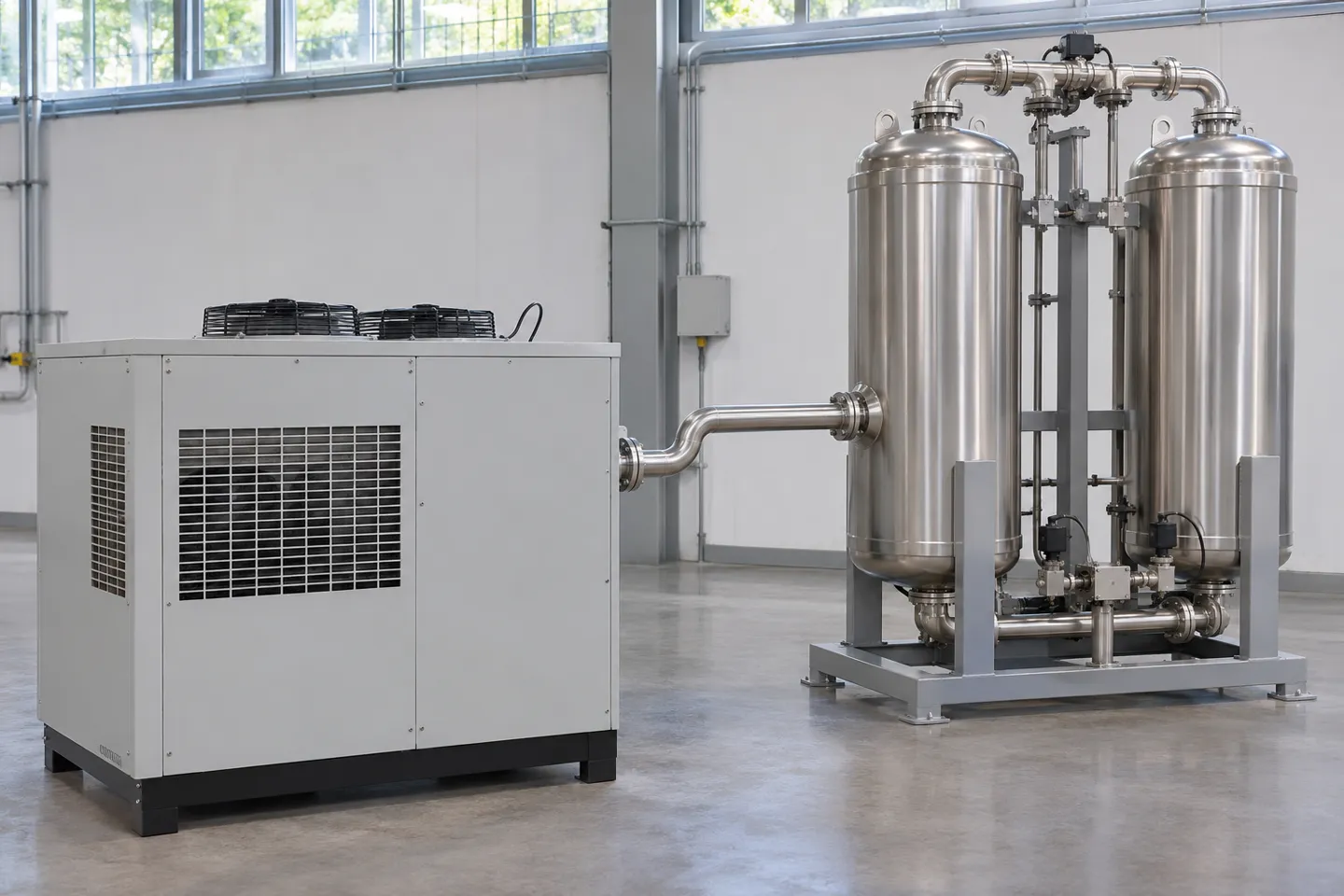
Refrigerated and adsorption dryers can also be used in series when the units are designed to work together. The refrigerated stage removes part of the water-vapor load by cooling and draining condensate, and the adsorption stage lowers the remaining moisture content. During startup, verify that outlet PDP has stabilized within specification before admitting air to a moisture-sensitive process. The time required depends on the equipment and bed condition.
Dew point class to technology mapping
| ISO 8573-1 water class | Maximum pressure dew point | Common dryer option | Illustrative applications |
|---|---|---|---|
| Class 4 / Class 5 | ≤ +3 °C / ≤ +7 °C | مجفف مبرد | General shop air and above-freezing lines |
| Class 3 | ≤ −20 °C | Rated adsorption dryer | Selected process air and outdoor services |
| Class 2 | ≤ −40 °C | Rated adsorption dryer | Some instrument air and coating systems |
| Class 1 | ≤ −70 °C | Adsorption dryer specifically rated for this duty | Selected moisture-sensitive processes |
One discipline turns this from a quiz into a decision. Air is not “dry” in general; it is dry to a class, and the class belongs in your purchase order, not in a verbal description. And the fork has a waste side too. Buying a twin-tower desiccant dryer for a shop that only ever needed +3°C class air means paying purge losses and maintenance for capability you will never use.
Once the class is on paper, the next buying decision is the fill itself, and that is where a purchase order earns its keep.
Specifying the Fill: Buying Desiccant by Parameters, Not by Liters
A replacement bed is bought by the liter or the kilogram, but two fills of the same volume can behave completely differently. The difference is in the datasheet, and every parameter on it maps to a failure mode you have either planned for or not.
The five parameters that decide bed behavior
Static water adsorption, reported as a mass percentage, shows how much water a sample holds at equilibrium under the stated conditions. Request the test temperature, relative humidity, sample preparation, and reporting basis. Comparing an alumina value measured at 60% RH with a sieve value measured at 75% RH cannot establish which material performs better in the same dryer. Ask for dynamic working capacity or outlet dew point data under a representative cycle when evaluating a change of grade.
Crush strength, often reported in newtons per bead, describes resistance to a specified compressive load. A larger particle can show a higher force at failure simply because of its geometry. For acceptance, compare the same size range, particle form and test method, and agree on whether the supplier reports a minimum or an average. Track fines separately through an attrition test.
Attrition is mechanical wear that can generate fines during handling and service. Dust can collect in afterfilters, valves, or exhaust mufflers and may increase pressure drop. Request the method and sampling basis behind any reported mass percentage, and distinguish wear generated during the test from loose dust already present in the shipment.
Bulk density in grams per milliliter converts a defined tower fill volume to an estimated media mass. Loose-poured and tapped density can differ. Use the density basis that matches the loading procedure, and compare quotes against the mass required for the approved tower fill, including any agreed allowance for handling and settlement.
Size and regeneration match close the list. Bead diameters from 1.6-2.5 mm to 3-5 mm (and 1/16″ or 1/8″ pellet forms) set the pressure drop across the bed. Each material also releases its water at different temperatures, so the fill has to tolerate the regeneration scheme you actually run.
Fill parameters mapped to failure modes
| المعلمات | What it tells you | Failure mode if ignored | Acceptance action |
|---|---|---|---|
| Static water adsorption (mass %, with conditions) | Equilibrium water uptake | Misleading comparisons across test conditions | Compare at identical RH and temperature. Verify dynamic performance separately. |
| Crush strength (N) | Survival of loading and cycling | Fines generation, dust downstream | Sample and crush against contract value |
| Attrition (mass %) | Fines generated in a defined wear test | Potential dust accumulation or filter loading | Specify the test method and lot acceptance limit |
| Bulk density (g/ml) | Kilograms per tower volume | Hidden cost per tower | Convert quotes to cost per tower, not per liter |
| Size and regeneration match | Pressure drop and regeneration fit | Bed fails to regenerate fully | Match material grade to your regeneration temperature |
The acceptance routine that protects the purchase
Require a certificate of analysis for each batch and confirm that the supplier can trace the lot and provide retained samples if agreed. On arrival, sample the lot and compare it with the contract values. Confirm the package weight, moisture barrier, storage requirements and handling method before ordering. Drums, cartons, and bulk bags suit different changeout arrangements. Choose a format that allows the crew to maintain lot traceability and keep unopened fill dry.
Fill purchase checklist
- Dew point class and oil exposure written on the PO.
- Material and layering chosen against the matrix above.
- Parameters with test conditions in the contract.
- Batch COA and retained-sample traceability required.
- Packaging and changeout plan agreed.
The matrix below is the whole decision in one view.
Fill choice matrix with boundaries
| Fill plan | Fits when | Boundary: when it stops working |
|---|---|---|
| الألومينا المنشطة | The dryer is rated for the duty with the specified alumina grade | Check the inlet conditions and cycle before substituting another grade |
| المنخل الجزيئي | The specified grade is approved for the dryer and deep-drying target | Check purge or heating conditions and upstream contamination controls |
| Layered alumina + sieve | Separate bulk drying and final polishing are part of the design | Match each layer to the specified loading, flow direction and regeneration cycle |
| Air-dryer-grade alumina | The dryer specification calls for a particular formed grade | Compare demonstrated performance and service costs for equivalent grades |
Specified this way, a fill order turns into an enforceable document. Which matters most when something goes wrong and the invoice for the failure lands on the bed.
When the Dew Point Slips: Failure Attribution and Bed Health
When outlet dew point rises, verify the measurement first. Check sensor condition, sampling flow and sampling pressure. A reading at a different pressure or before the sample line has stabilized can mislead the diagnosis.
Next, review inlet pressure, temperature and flow against the dryer rating. Inspect the separator, drains and upstream filters for carryover. Compare both towers over a complete cycle, watching valve operation, purge flow, exhaust restrictions, heating or cooling where applicable, and repressurization. Valve leakage can let wet air bypass the bed, while inadequate purge can leave residual moisture after regeneration. Once these checks point to the media, evaluate contamination, settlement and fines before approving a changeout. See the desiccant air dryer troubleshooting guide for a symptom-by-symptom sequence.
Oil aerosols and vapor can reduce the bed’s usable capacity if they reach the media. Check for abnormal compressor carryover and verify that upstream treatment addresses the form of oil present. A coalescing filter removes aerosols. Vapor removal, if required, calls for an appropriate separate treatment stage. Correct the source of contamination and follow the dryer manufacturer’s guidance on whether the affected fill can remain in service.
Do not order a replacement fill until regeneration settings, switching valves, upstream oil filtration, and inlet conditions have been ruled out. And after a changeout, re-verify the regeneration configuration: a new bed run on old settings will age exactly the same way.
Drain and filter faults can produce symptoms that resemble bed failure. A blocked or failed drain can allow liquid to carry over into the dryer, and a loaded filter can raise differential pressure. Check both against their maintenance and operating criteria when dew point or pressure drop changes.
A dew point trend across several complete switching cycles is more useful than a single reading. An earlier rise near the end of one tower’s drying interval may indicate breakthrough, but changes in inlet moisture, flow or regeneration can shift the curve too. Compare the two towers under similar conditions and correlate the trend with maintenance and process changes.
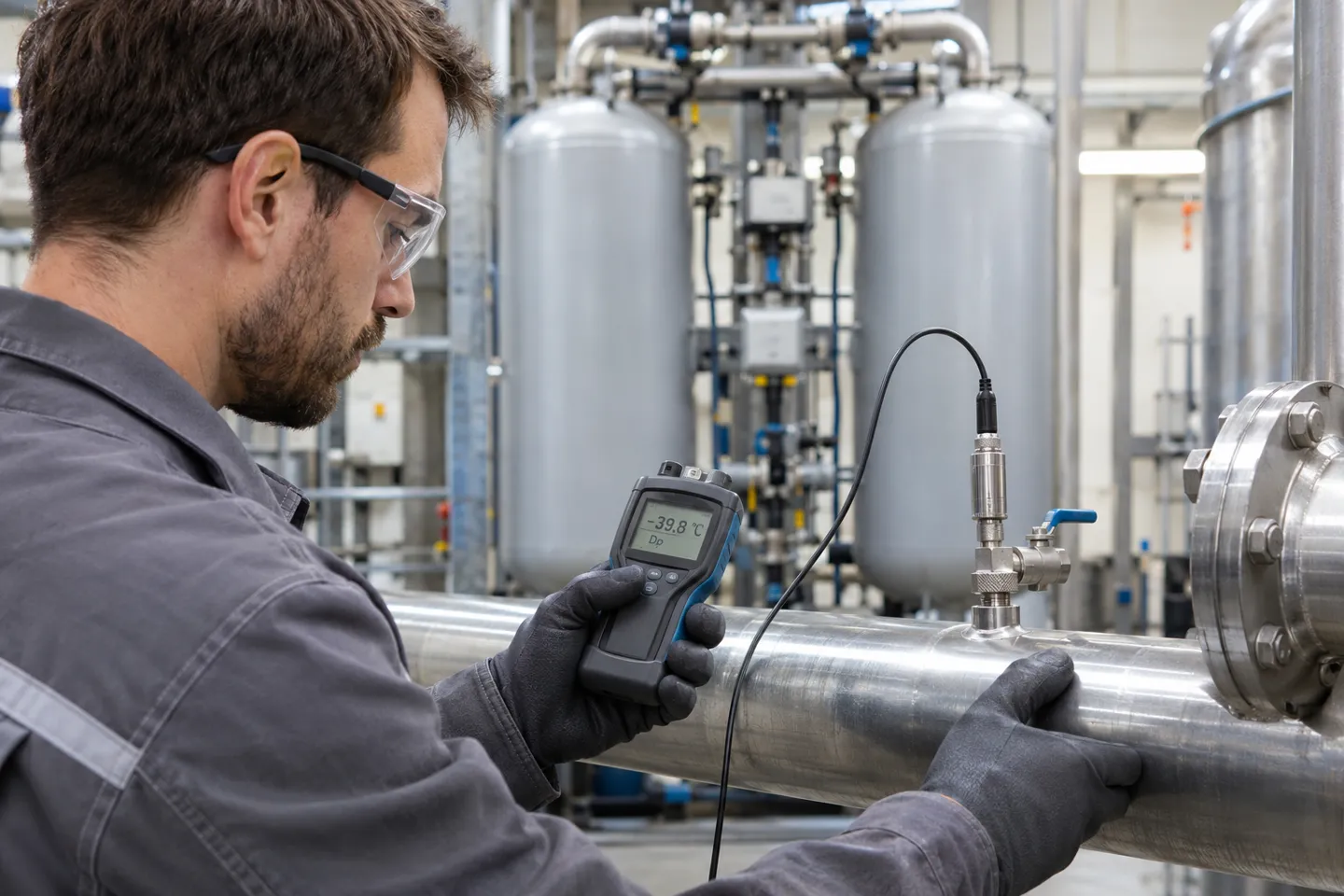
When the evidence points to the fill, confirm the replacement grade, layer sequence and loading quantities. After changeout, verify outlet PDP, pressure drop and repeatability across both towers.
What to Check Before Replacing a Dryer Fill
Compare the proposed fill against the dryer’s original media specification and operating envelope. Vessel dimensions, airflow distribution, valve operation and regeneration all affect what the fill can deliver. Record the grade and lot installed in each tower so later operating trends can be tied back to the changeout.
Use the purchase specification to agree on acceptance values and methods before ordering. After commissioning, document inlet conditions and outlet PDP across full cycles and retain a baseline pressure-drop reading. These measurements help distinguish media performance from changes in the air supply or dryer operation.
Jalon supplies الألومينا المنشطة المستخدمة في مجففات الهواء و 4A من المناخل الجزيئية. قم بمشاركة مواصفات الوسائط المعتمدة، ونقطة الندى المستهدفة، وطريقة التجديد، من أجل مقارنة الدرجات المرشحة وطلب شروط الاختبار ذات الصلة ووثائق الدُفعات.
مراجعة مواصفات المواد المجففة
احصل على مواصفات تعبئة مصممة خصيصًا لأبراجك
أرسل إلينا نقطة الندى الضغطية المستهدفة، وطريقة التجديد، وحجم البرج، وطراز المجفف، حتى تتمكن شركة «جالون» من تقديم المشورة بشأن المواد المرشحة والوثائق المطلوبة.
طلب مواصفات التعبئةالمراجع
- وزارة الطاقة الأمريكية. تحسين أداء أنظمة الهواء المضغوط: دليل مرجعي للصناعة.
- وزارة الموارد الطبيعية الكندية. الدليل المرجعي لكفاءة الطاقة: الهواء المضغوط.
- قائمة تكنولوجيا الطاقة في المملكة المتحدة. مجففات الهواء بالمواد المجففة المزودة بأجهزة تحكم موفرة للطاقة.
- المنظمة الدولية للتوحيد القياسي. ISO 8573-1:2010 — الهواء المضغوط: الملوثات وفئات النقاء.
- المنظمة الدولية للتوحيد القياسي. ISO 7183:2007 — مجففات الهواء المضغوط: المواصفات والاختبارات.



 EN
 DE
 ES
 JA
 RU
 PT
 FR
 AR
 KO
 TH
 ID